Recycled vs. virgin raw materials: cost, quality and availability
Recycled isn't always cheaper and virgin isn't always better. Here's how manufacturers in Mexico compare total cost, quality and supply to choose with data.
By Zikloa TeamPublished 5 min read
Key takeaway: Recycled raw materials usually cost less per kilogram and carry a smaller environmental footprint, but they require tighter control of lot-to-lot variation. Virgin material gives you a locked specification at the price of more exposure to global pricing and import lead times. The right answer is rarely "one or the other" — it's which material fits each part.
If you run a plant in Mexico, the choice between recycled raw materials and virgin resin probably reaches you from three directions at once. Your corporate parent or end customer has recycled-content targets, finance wants lower material cost and quality wants zero surprises on the line. Nearshoring adds a fourth: the push to source locally instead of waiting on imports.
This guide breaks down what each option really is, how to compare total cost instead of price per kilo, what quality differences to expect and how supply behaves in Mexico. It closes with a simple part-by-part decision method.
What counts as virgin vs. recycled material
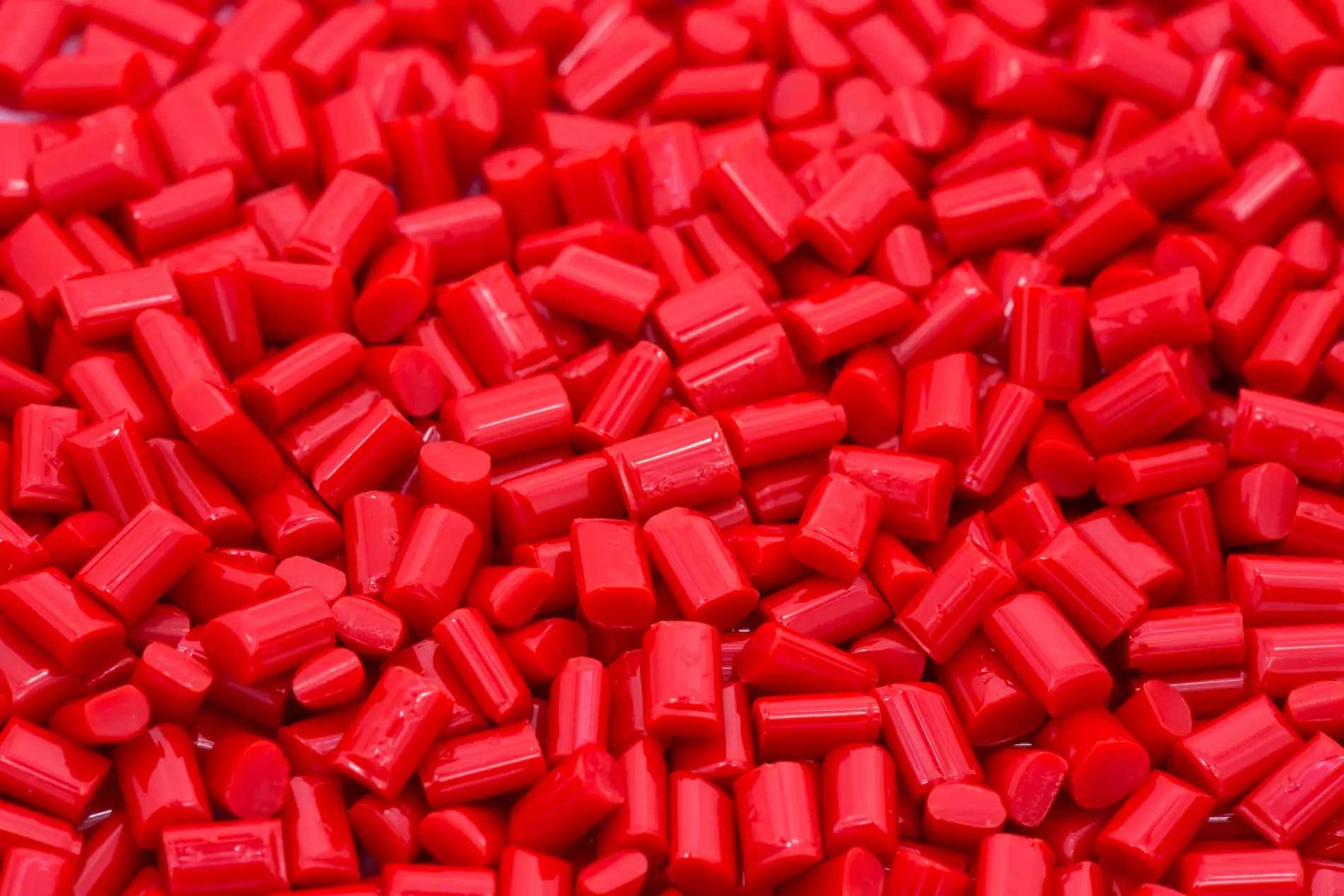
Virgin raw material is processed for the first time. For plastics, that means resin polymerized from oil- or gas-derived monomers, with a technical data sheet set by the producer and very stable values from lot to lot.
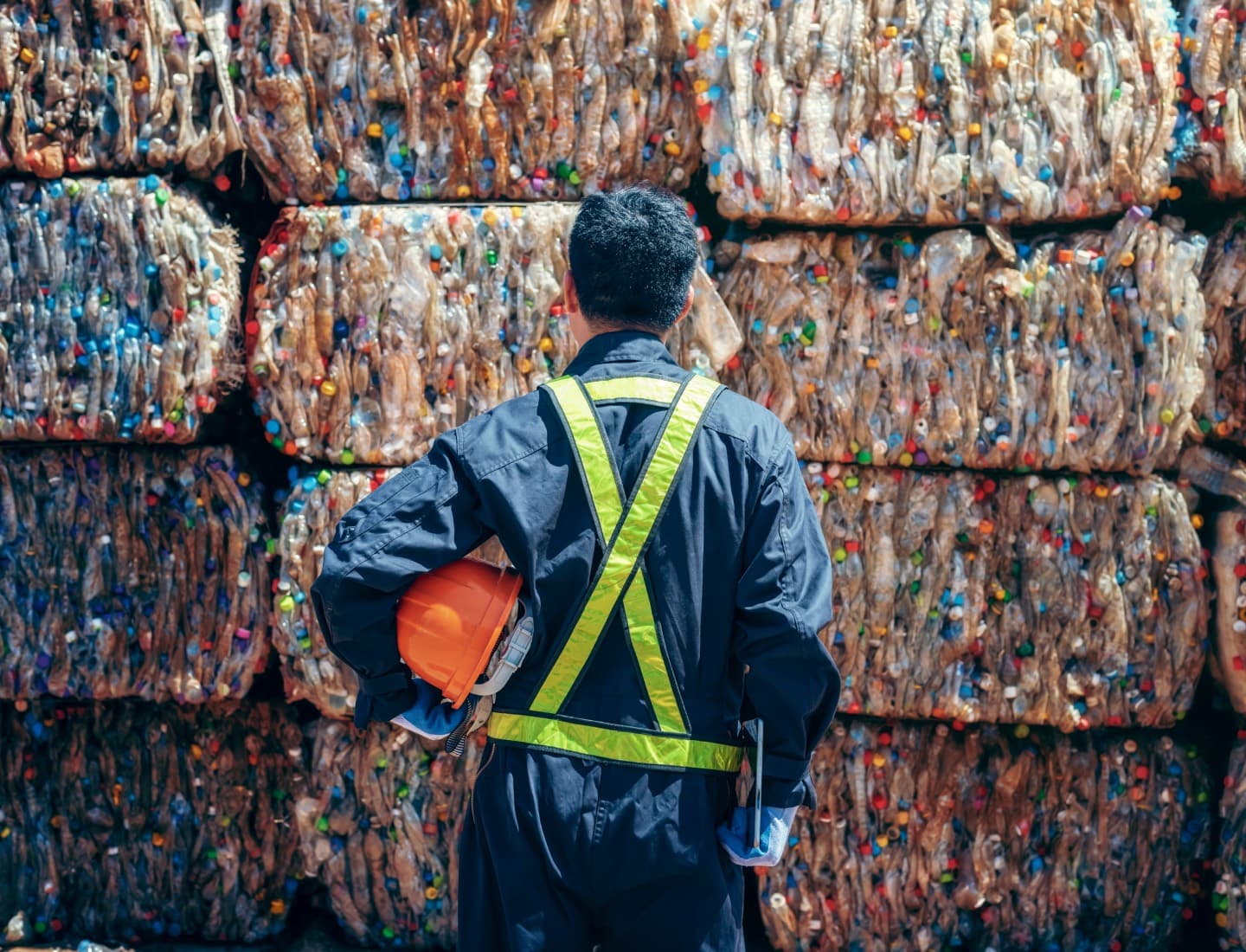
Recycled raw material has gone through at least one use or processing cycle. Two sources behave very differently:
- Post-industrial (pre-consumer): trim, runners, purgings, rejected parts or sheet skeletons from another plant. The composition is known and it's usually clean.
- Post-consumer: products that reached end of life, such as bottles, packaging or crates. Expect more variation and more contamination risk.
Format matters too: regrind, repro pellets, or material for reprocessing, such as filled and unfilled nylon headed back to compounding. And it's not only plastics: cardboard, wood and polypropylene pallets and other packaging inputs also come in recovered versions.
Cost: compare total cost, not price per kilo
Virgin resin pricing tracks oil, natural gas, monomers and petrochemical capacity — and, when imported, exchange rates, freight and customs. Recycled pricing depends on how much scrap is available, collection, sorting and processing (grinding, washing, pelletizing), plus demand for recycled content.
That's why price per kilo is misleading. What matters is cost per good part:
Cost per good part = (material + processing + inspection) ÷ approved parts
When you run the numbers, include the costs that never show up on a quote:
- Additional scrap if recycled material causes more rejects.
- Extra drying or cycle-time adjustments.
- More frequent incoming inspection.
- Color correction with masterbatch.
- Customer claims if something goes wrong.
On the other side, count the savings: lower material cost, meeting recycled-content requirements your customers set and, often, the chance to sell your own scrap to the same supplier. The only way to know which option wins is to run a trial and measure.
Quality: what differences to expect
A well-selected recycled material can perform like virgin in many parts, but know its limits:
- Heat history. Every processing cycle degrades polymer chains a little. Polypropylene, for example, tends to undergo chain scission during reprocessing, which pushes its melt flow index up.
- Lot-to-lot variation. Melt flow, moisture, color and contamination can shift between lots if the supplier doesn't segregate by source.
- Contamination. Other polymers, metal particles, labels or dust show up as black specks, gels or short shots.
- Color. Recycled material tends to be dark or mixed; natural and light colors are scarcer.
- Fillers. In reprocessed glass-filled nylon, fibers get shorter during grinding and reprocessing, so mechanical properties may fall below the original grade.
- Regulated applications. Food contact and medical uses typically require virgin material, or recycled material from specifically approved processes.
Availability: how supply works in Mexico
Virgin resin is widely available, but a significant share arrives as imports. That exposes you to transit times, exchange rates and disruptions at producing plants or in international logistics — the same risks many companies nearshored to reduce.
Recycled raw material is local by nature: it comes from scrap generated by plants in Mexico. Industrial corridors such as the Monterrey metro area and the Valley of Mexico produce steady volumes of post-industrial material, which supports short lead times. The constraint is the specific grade: a natural color, an exact melt flow index or a large, continuous single-source volume is harder to secure.
The most resilient strategy usually combines both: recycled as the base wherever performance allows, virgin as backup and for critical parts.
Side-by-side comparison
| Criterion | Virgin raw material | Recycled raw material |
|---|---|---|
| Price per kilo | Tied to oil, monomers and exchange rates | Usually lower; depends on scrap supply |
| Consistency | High, locked specification | Variable; depends on source and supplier control |
| Color | Natural or precolored to order | Limited; mostly dark or mixed shades |
| Properties | Full data-sheet values | May drop due to heat history or broken fibers |
| Supply | Broad, but exposed to imports | Local, but limited by grade and volume |
| Environmental footprint | Higher | Lower: avoids producing new polymer |
| Regulated applications | Suitable | Restricted unless from approved processes |
When each option makes sense
Go virgin when:
- The part is safety-critical or structural.
- It involves food contact or medical use.
- Surface appearance or an exact light color is a customer requirement.
- Tolerances are so tight there's no room to adjust the process.
Go recycled when:
- The part is hidden or non-structural.
- The color is black, gray or another dark shade.
- It's industrial packaging: pallets, trays, dividers.
- Your customer requires recycled content and the design has margin.
Go with a blend when you want to cut cost or add recycled content without redesigning the part. It's the most common way to start.
A part-by-part decision method
- Rank parts by criticality (A: critical, B: functional, C: non-critical).
- Set the minimum acceptable spec for each one: melt flow range, impact, color and tolerances.
- Request samples and the data sheet. Here's what to look for in a recycled plastic data sheet.
- Trial stepped percentages and record scrap rate, cycle time and dimensions. Our guide to adding recycled content to production walks through the method.
- Calculate cost per good part using real trial data.
- Secure a primary source and a backup, using clear criteria for choosing a recycled raw material supplier.
How Zikloa can help
Zikloa supplies both recycled and virgin raw materials, so you can compare options and build blends with a single supplier in Mexico. Our raw materials catalog includes virgin Nylon 66, filled virgin Nylon 6, filled and unfilled nylon for reprocessing, extrusion-grade ABS, PC/ABS, blue and black virgin polypropylene, polystyrene trays, polyethylene bags, cardboard, and wood and polypropylene pallets.
With more than 15 years in industrial recycling and offices in Nuevo León and Mexico City, we can help you define which material fits each part, whether you're launching a new line or localizing supply for an existing one. Tell us what you manufacture and request a quote.
- #recycled raw materials
- #virgin resin
- #procurement
- #plastics
- #nearshoring
Frequently asked questions
Do recycled raw materials perform the same as virgin?
It depends on the material and its history. Clean, single-source post-industrial regrind can come very close to the original resin, while post-consumer or mixed streams vary more. Validate with lot-by-lot testing rather than assumptions.
Can I blend virgin and recycled resin in the same part?
Yes, as long as both are the same polymer with compatible melt flow. Most plants start with a low recycled percentage and raise it as parts keep passing their quality checks.
Does sourcing recycled material locally in Mexico help with lead times?
Often, yes. Recycled supply comes from scrap generated by plants in Mexico, so it avoids ocean freight and customs delays. The trade-off is that specific grades and large single-source volumes can be harder to secure.