Copper recycling: a complete guide for businesses
A practical guide for plants operating in Mexico: which copper scrap you generate, how to classify and protect it, and how to turn it into documented revenue.
By Zikloa TeamPublished 5 min read
Key takeaway: Copper recycling is one of the most direct ways to turn industrial waste into revenue: the metal keeps its properties no matter how many times it is melted, and recycling it uses roughly 85% less energy than producing it from ore. To capture that value, your plant needs to know which copper streams it generates, segregate them at the source, secure them, and sell them with verifiable weights and paperwork.
For many manufacturers that have set up operations in Mexico, copper recycling starts informally. A maintenance crew pulls out old wiring, a project leaves spools of cable behind, a motor gets decommissioned, and the copper ends up in a corner of the warehouse. Weeks later nobody knows exactly how much there is, who sold it, or where it went.
That is a problem for more than one reason. Copper is valuable, it is a common target for theft, and corporate EHS and finance teams increasingly expect every waste stream to be traceable. This guide covers the copper scrap types you will find in a typical plant, how to sort and store them, what happens after pickup, and what determines what you get paid.
Why copper deserves its own program
Treating copper like any other scrap leaves money and data on the table. Three things set it apart:
- It recycles without degrading. Copper can be remelted and refined repeatedly while keeping its electrical and thermal conductivity, which is why recovered copper goes back into demanding uses such as electrical conductors.
- It avoids energy-intensive mining. Primary copper comes from ore with a low metal concentration, so huge volumes of rock must be mined and processed. Recycling skips that and uses around 85% less energy.
- It packs a lot of value into a small volume. Among the metals a plant generates, copper is typically one of the best paid per kilogram. A small, poorly managed bin can be worth more than a large container of steel.
The takeaway for your operation: copper needs a dedicated container, a dedicated log and a named owner.
Copper scrap types you will find in a Mexican plant
If your team is used to US scrap terminology, keep in mind that Mexican buyers rarely use ISRI grade names such as bare bright or #2 copper. Each buyer has its own Spanish names, so what matters is that your internal categories are clearly defined and agreed in writing.
| Scrap type | Typical source | What determines its category |
|---|---|---|
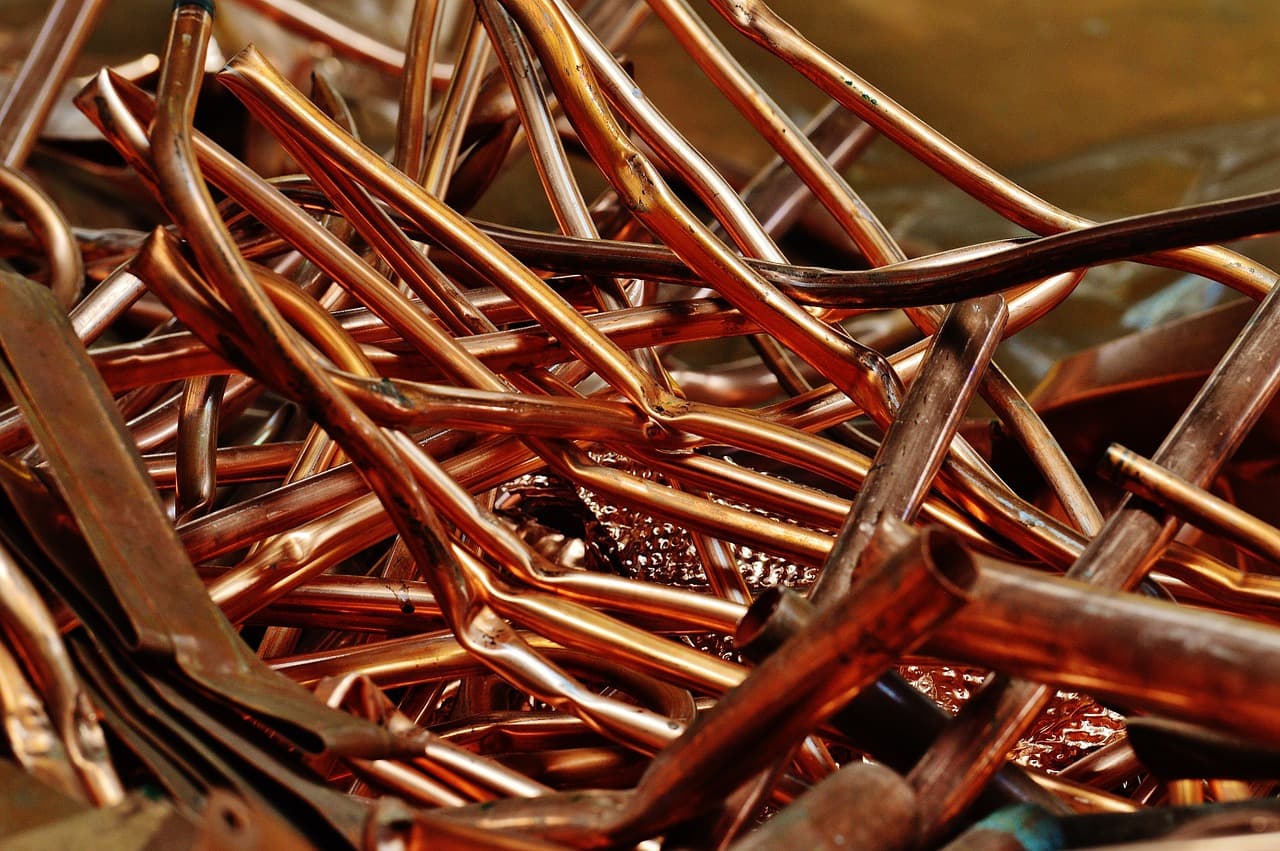
| Clean bare copper | New wire offcuts, bus bars, electrical installation leftovers | No insulation, no visible oxidation, no tin plating or paint |
| Lower-grade copper | Maintenance tubing, oxidized wire, soldered parts | Oxidation level, solder residue, fittings made of other metals |
| Insulated wire and cable | Rewiring projects, equipment cords, extension cables | Wire gauge and copper-to-insulation ratio |
| Copper-bearing equipment | Motors, transformers, compressors | Steel content and other components |
| Coils and heat exchangers | HVAC and refrigeration units | Copper combined with aluminum or brass |
| Copper chips and turnings | Machining and stamping | Moisture, cutting oil and mixing with other chips |
Brass and bronze parts, such as valves, fittings and bushings, belong in their own category. Our guide on identifying and selling brass and bronze explains why mixing them with copper costs you money.
Source segregation: a simple routine for the floor
Sorting is cheapest and most accurate where the scrap is generated. A routine that works in most plants:
- Set up dedicated bins by family. At a minimum: clean copper, insulated wire, and copper-bearing parts or equipment.
- Remove non-copper items when it is quick and safe. Steel clamps, screws, plastic connectors and tape all reduce the value of a lot.
- Keep chips and turnings separate from solids, dry, and away from other metals' chips.
- Sort insulated wire by gauge if your volumes justify it; heavy cable carries more copper per kilogram than thin wire.
- Never burn insulation. Burning cable releases toxic fumes, damages the metal and can expose your company to environmental penalties. Recyclers remove insulation mechanically with granulating equipment.
- Label every bin with the material type and the responsible area, ideally in both Spanish and English if your floor staff and managers use different languages.
Hand-stripping wire rarely pays for your team's time or the risk of cuts. In most cases it is better to hand over well-sorted cable and let the recycler process it.
Security and inventory control
Copper theft is a concern in many markets, and an unmanaged scrap pile is an easy target. Basic controls go a long way:
- Store copper in a closed, covered area with restricted access.
- Keep an intake log: date, source area, material type and approximate weight.
- Reconcile what maintenance or project teams report as removed against what is actually sold.
- Sell only to formal buyers who issue a CFDI invoice, weigh on a verifiable scale and provide documentation.
- Schedule pickups before bins overflow; visible, accumulated material invites shrinkage.
The storage area also matters for compliance. Our article on temporary on-site waste storage best practices covers how to set it up.
From your dock to new copper: what happens after pickup
Knowing the downstream process explains why sorting at the source has such an impact on price:
- Receiving and weighing. Each lot is weighed and logged by category.
- Inspection and classification. Material is checked visually and, when needed, with analyzers that confirm composition.
- Preparation. Cable is granulated to separate copper from plastic, equipment is dismantled, and material is cut or compacted.
- Melting and refining. High-purity clean copper can be remelted with little preparation. Lower grades go through refining, including electrolytic refining, to reach the purity the electrical industry requires.
- New products. Wire, tube, sheet, or alloys such as brass and bronze.
Every contaminant in a lot adds a preparation or refining step, and that cost shows up in the price you receive.
What drives the value of your copper scrap
Copper pricing starts from international benchmarks and the peso-dollar exchange rate, then adjusts for the characteristics of your lot. With copper, the gap between one category and the next tends to be wider than with other metals, so misclassification is expensive. The factors you control are:
- The purity and category of each lot.
- Separation between copper, brass, bronze and aluminum.
- The volume you accumulate before each pickup.
- The quality of the documentation behind every sale.
For a full breakdown of how buyers build a quote, read how scrap metal prices are set in Mexico.
How Zikloa can help
Zikloa buys and collects copper and non-ferrous metals, including brass and bronze, using certified scales and providing the documentation your EHS and finance teams need. With more than 15 years of experience and offices in Nuevo León and Mexico City, we can help you define categories, pickup frequency and a control process that fits your corporate standards.
Tell us what your plant generates and request a quote for your copper scrap.
- #copper
- #non-ferrous metals
- #scrap metal
- #industrial recycling
Frequently asked questions
Does copper lose quality when it is recycled?
Not in any meaningful way. Copper can be remelted and refined many times while keeping its conductivity; what limits its value is contamination with other materials, not the number of cycles.
Do US copper grade names apply in Mexico?
Not directly. Mexican buyers usually work with their own Spanish trade names, which may not map one-to-one to the ISRI grades your US team knows. Agree on written definitions for each category before the first shipment.
What paperwork should we get when we sell copper scrap in Mexico?
At minimum, a scale ticket showing gross, tare and net weight, a CFDI electronic invoice for the sale and, if your corporate team tracks ESG metrics, a recycling certificate stating material, quantity and destination.