Roll-off containers: sizes, uses and how to pick the right one
Choosing a roll-off container in Mexico comes down to volume, material density and site access. Here is how to decide between 15, 20 and 30 m³ units.
By Zikloa TeamPublished 6 min read
Key takeaway: Choosing between 15, 20 and 30 m³ roll-off containers comes down to three things: how much material you generate between pickups, how dense it is and how much room your yard has for the truck. Light, bulky material makes the most of a large container; heavy metal scrap usually reaches the weight limit before it fills the box.
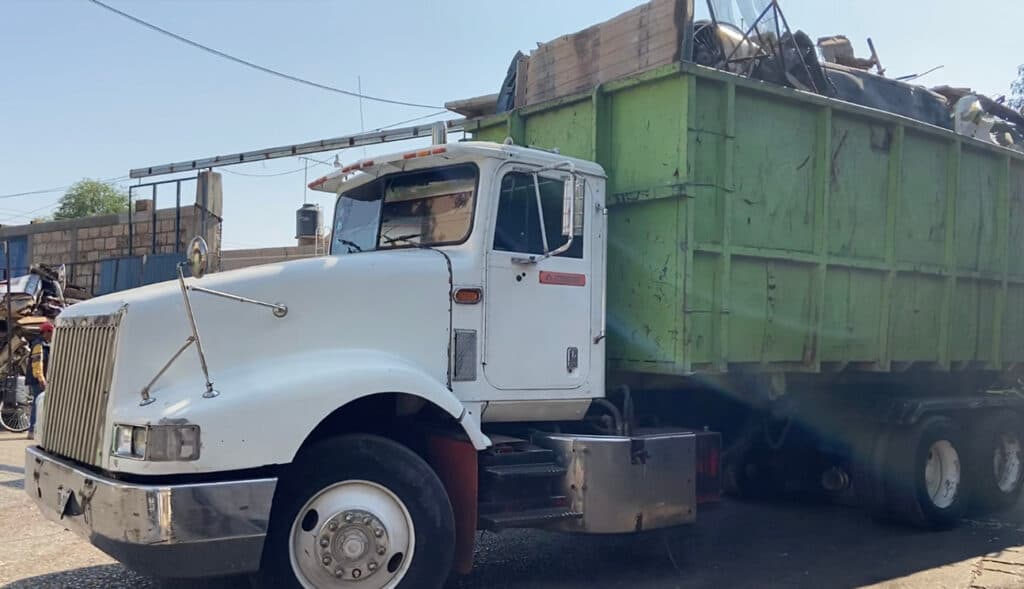
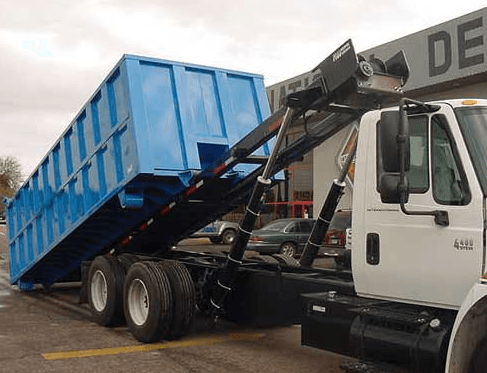
Roll-off containers are the workhorse of industrial waste and recycling logistics in Mexico, just as they are in the US. A truck with a hydraulic hoist pulls the full container onto its bed, hauls it away and drops an empty one in its place. Your team fills it at its own pace, without waiting for the truck.
If you are setting up or expanding a plant in Mexico, two details may differ from what your corporate playbook assumes. Sizes are quoted in cubic meters rather than cubic yards, and weight limits depend on Mexican road rules and on the carrier's equipment. This guide covers how roll-offs work, which size suits which material and what your site needs to receive one.
How roll-off containers work
A roll-off is an open-top, rectangular steel box with rails or skids underneath. The truck that moves it has a tilting bed and a hook or cable system that pulls the container up and locks it in place for transport.
The service cycle is simple:
- The provider drops an empty container at the agreed location.
- Your team fills it with a single material stream, or with whatever mix you agreed on.
- When it is full, you request a swap, or it happens on a scheduled date.
- The truck removes the full container, leaves an empty one, and the material is weighed and processed.
The big advantage over manual loading is that the truck never waits while the box is filled. The swap takes little time, and for the rest of the day the container works as a staging area for material ready to leave the plant.
Roll-off container sizes: 15, 20 and 30 m³
The most common sizes for industrial collection in Mexico are 15, 20 and 30 cubic meters. The approximate cubic-yard equivalents below will help if your global standards are written in US units. Treat the table as a starting point, since every plant generates differently.
| Size | Approx. US equivalent | Best suited for | Typical materials | Watch out for |
|---|---|---|---|---|
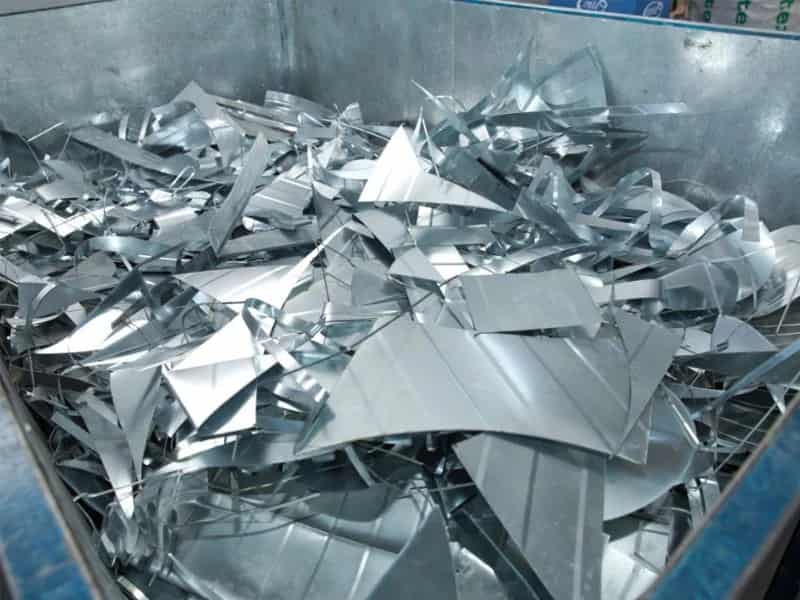
| 15 m³ | ~20 yd³ | Dense material or moderate volumes | Heavy ferrous scrap, sheet metal trim, metal chips | Bulky material fills it very quickly |
| 20 m³ | ~26 yd³ | Middle ground between volume and weight | Mixed metal scrap, aluminum extrusions, rigid plastic scrap | Check weight if heavy parts are mixed in |
| 30 m³ | ~39 yd³ | Light, bulky material | Loose cardboard, stretch film, pallets, plastic packaging | Heavy metal can exceed the load limit |
Plants with several material streams often combine sizes, for example a 30 m³ container for cardboard and a 15 m³ container for ferrous scrap.
Volume vs. weight: the most common sizing mistake
Every container has two limits: physical space and the weight the truck can legally and safely carry. With light materials, volume is the real constraint; with dense materials, weight is.
- Light materials (uncompacted cardboard, film, foam, pallets) take up a lot of space and weigh little. A large container cuts the number of trips.
- Dense materials (ferrous scrap, metal chips, castings) can reach the maximum weight with the container half full. Loading it to the brim can become a safety issue.
- In-between materials (light metal scrap, aluminum, rigid plastics) depend heavily on part geometry and how well pieces nest together.
Ask your provider for the recommended maximum weight per container for your specific material. It varies with the truck and the route, so do not assume the figures you know from operations in other countries.
How to size a container for your plant
You do not need a formal study. One or two weeks of records will give you a solid estimate:
- Measure generation for each material: how many cages, pallets or bags you fill per day and their approximate volume.
- Set the pickup interval your operation can tolerate: how many days material can wait without blocking aisles or degrading.
- Multiply daily generation by the days between pickups.
- Add a buffer for production peaks, inventory counts or model changeovers. A 15 to 20% margin is a reasonable reference.
- Check weight if the material is metal or wet.
For example, if your line produces about 4 m³ of loose cardboard per day and you want pickups twice a week, you need room for roughly 14 m³ between swaps. With a buffer, a 20 m³ container is the logical choice. If you compact cardboard, volume drops and you may need fewer trips; see whether a cardboard baler is worth it for your business.
Container size and pickup frequency go hand in hand. To coordinate both with your shifts and docks, read our guide to scheduling industrial waste pickups without slowing operations.
Site requirements: what your yard needs
The container has to fit, but the truck also has to reach it, line up and lift it. Before choosing a location, check the following:
- Firm, level ground, concrete or well-compacted surface, able to support the truck with a full container.
- A straight approach in front of the container, plus extra room behind it for the truck to line up.
- Overhead clearance free of roofs, cables, branches and structures, because the bed tilts when loading and unloading.
- Enough turning radius at gates, guard booths and internal roads of the industrial park.
- Separation from pedestrian routes, emergency exits, fire hydrants and electrical panels.
- Distance from storm drains if the material can leak oil or coolant.
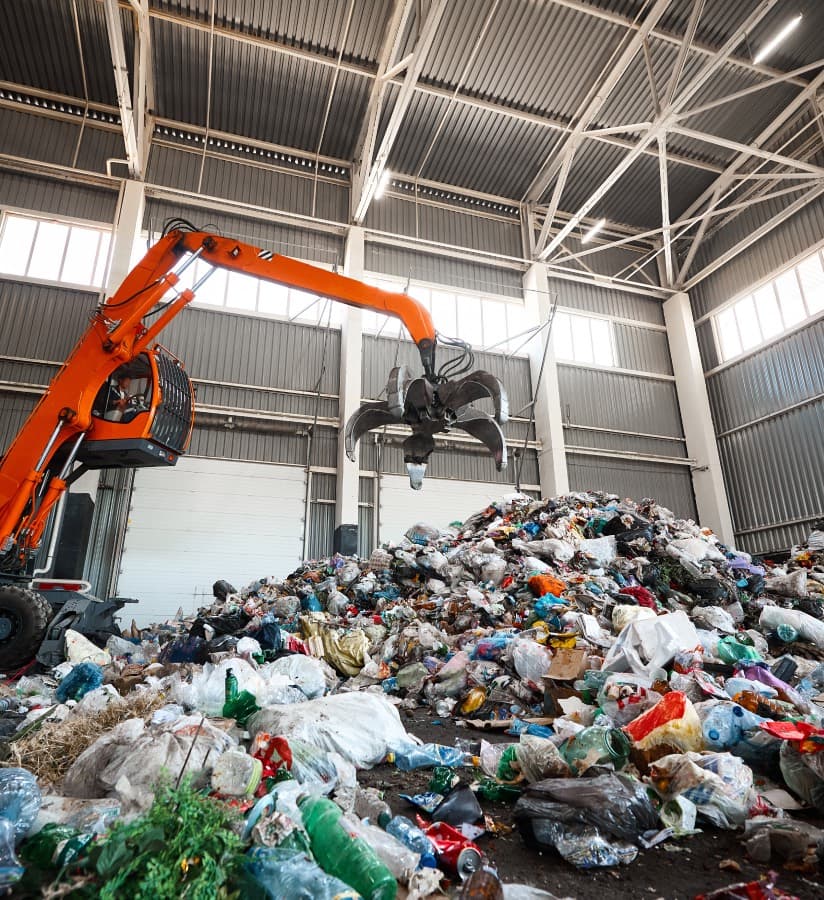
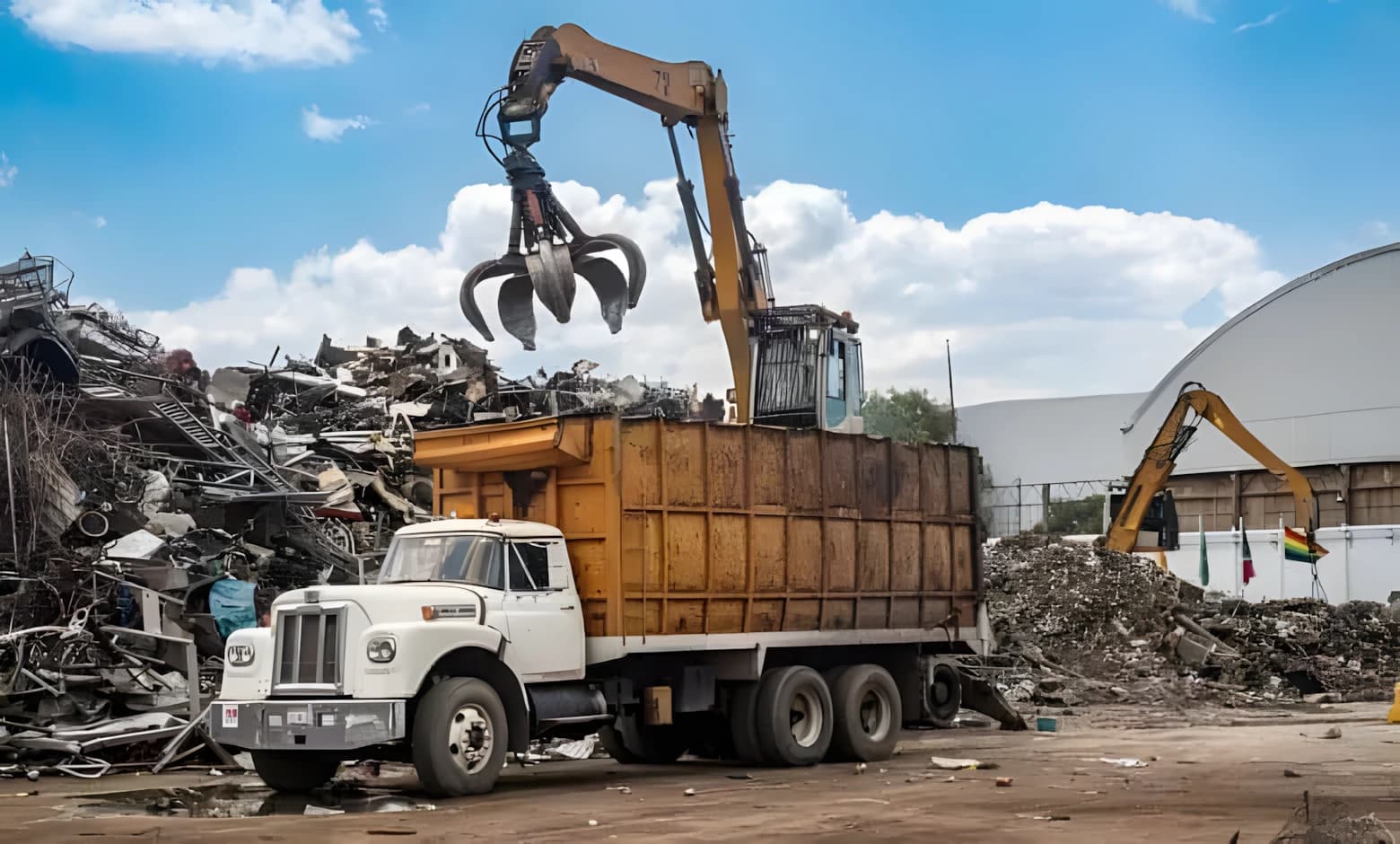
Ask your provider for the actual dimensions of each container and the maneuvering area their truck requires, rather than relying on US equipment specs. If your yard cannot fit a roll-off, or material is already piled on the ground, consider a grapple crane for bulk scrap.
Common loading mistakes
A good container used badly loses most of its advantages. These are the mistakes we see most often:
- Mixing materials. A container with cardboard, plastic and metal thrown together is worth less than its parts and may end up as waste with a disposal cost.
- Overfilling. Material sticking out above the rim can fall off in transit and has to be rearranged before the truck can move.
- Loading one side only. Uneven weight destabilizes the container as it is pulled onto the truck.
- Adding liquids or hazardous waste. Oils, solvents, containers with chemical residue or batteries need separate handling and a different type of authorized carrier.
- No signage. A clear sign listing accepted materials keeps other departments from treating the container as a general dumpster.
How Zikloa can help
Zikloa runs roll-off trucks with 15, 20 and 30 m³ containers, plus a grapple crane for bulk material. We weigh on certified scales, so you get a reliable record of what leaves your plant, which is useful for both internal controls and corporate sustainability reporting.
If you are not sure which size you need, tell us what materials you generate, in what volumes and what your yard looks like. With that, we can work out the right mix of containers and swap frequency with you. Learn more about our industrial waste collection service or request a quote for your plant.
- #roll-off containers
- #waste collection
- #logistics
- #industrial waste
Frequently asked questions
How do Mexican roll-off sizes compare to US cubic-yard sizes?
Mexico quotes roll-off containers in cubic meters. A 15 m³ unit is roughly 20 cubic yards, 20 m³ is about 26 cubic yards and 30 m³ is close to 39 cubic yards.
Can I put different materials in the same roll-off container?
You can, but mixing lowers the value of recyclables and can turn a sellable load into waste with a disposal cost. One container per material stream, or at least keeping metals, cardboard and plastics apart, usually pays off.
Is a bigger container always cheaper per ton?
Not necessarily. Dense materials can hit the truck's weight limit long before the container is full, while light materials benefit from the extra volume. Evaluate volume and weight together.