Cardboard balers and compactors: are they worth it for your business?
A baler can free up dock space, cut hauling and improve what you get for your cardboard, but it isn't always justified. Here is how to decide with numbers your corporate team will accept.
By Zikloa TeamPublished 5 min read
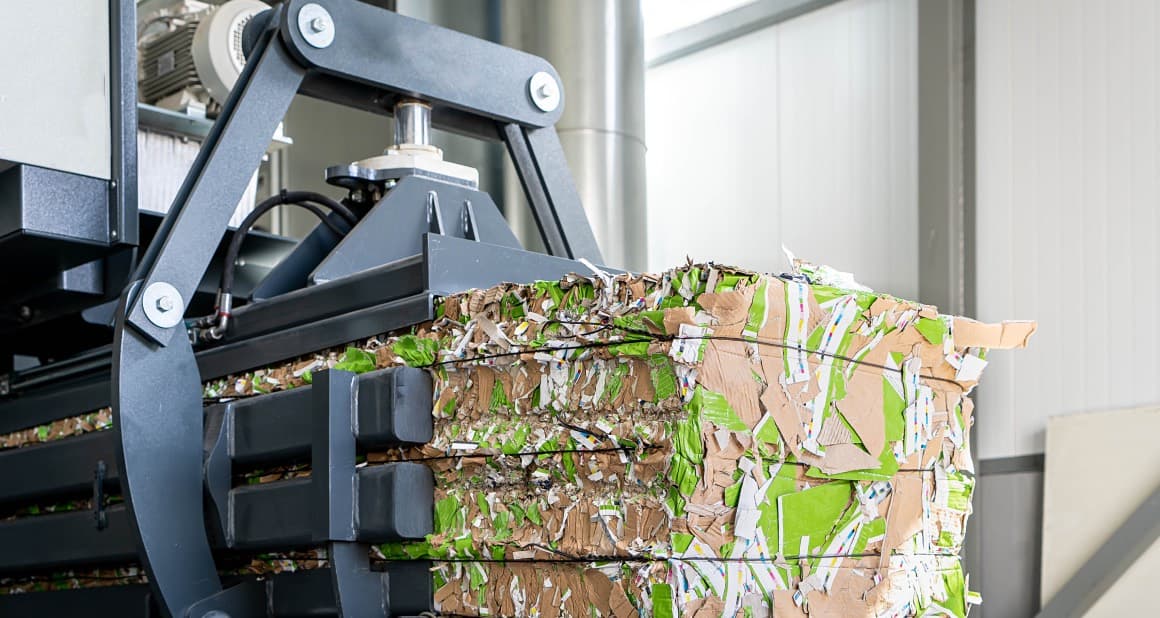
Key takeaway: A cardboard baler turns loose boxes into dense bales that take less space, ship more efficiently and usually earn better commercial terms. It pays off when you generate cardboard steadily, are short on space or are hauling containers full of air. With low or irregular volume, a well-managed container may be all you need.
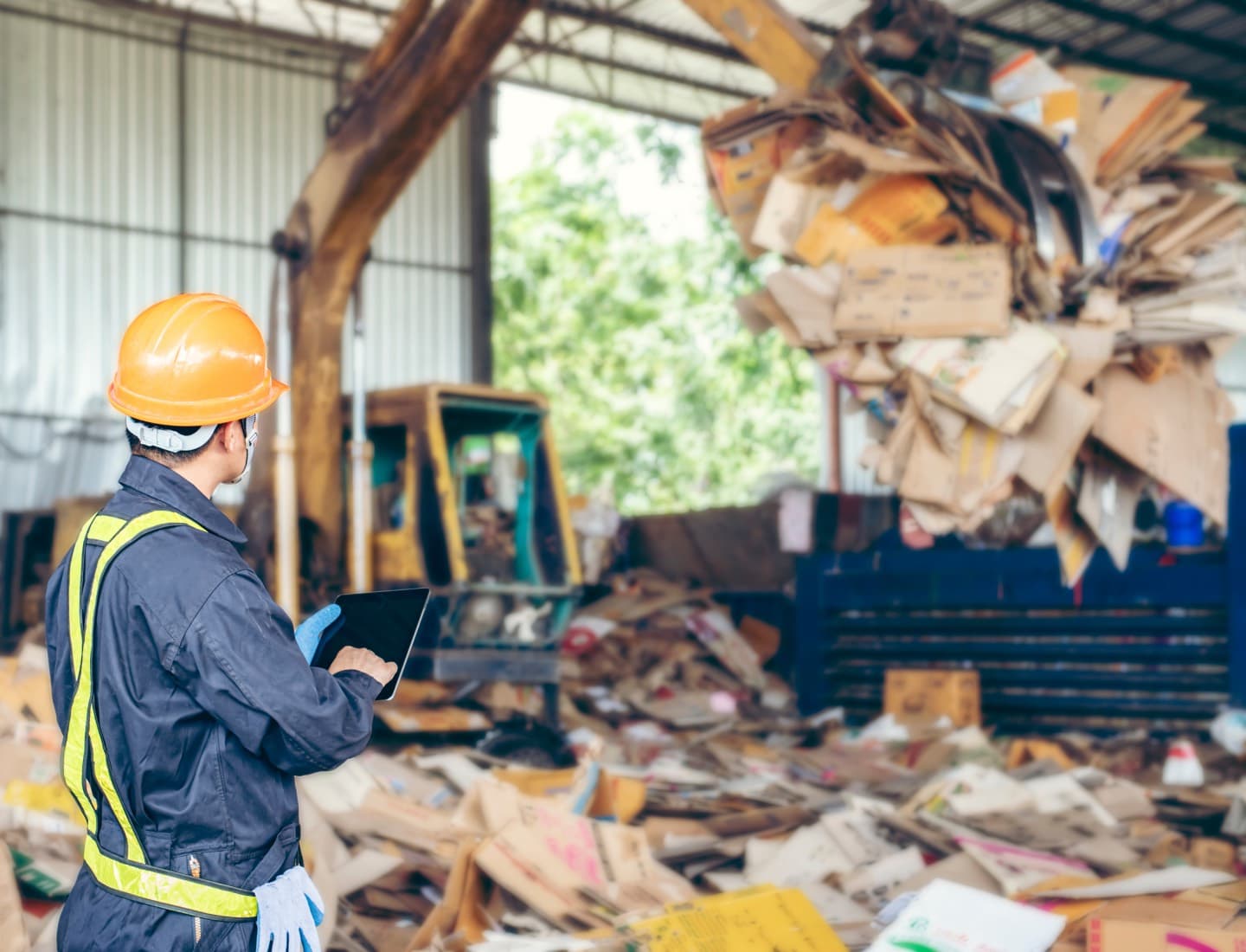
New plants in Mexico's industrial parks tend to hit the same wall a few months after start-up: empty boxes pile up faster than they leave, and the dock that looked generous on the layout is suddenly crowded. Someone suggests buying a cardboard baler, and the idea makes sense on paper. Less volume, a tidier site, a better-paid material.
But a baler is capital equipment. It draws power, needs maintenance and introduces a serious machine-guarding risk. If your plant is part of a global group, it also needs a business case that will survive a capex review. This guide covers the equipment options, the signals that justify one and a simple payback method.
Compactors and balers are not the same thing
The terms are often used interchangeably, but they do different jobs:
- Compactor. Compresses waste into a closed container. Mainly used for general trash, because it reduces trips to landfill.
- Baler. Compresses a single material in a chamber and ties it with wire or strapping to form a bale you can stack, weigh and sell.
For cardboard recycling you need a baler. Putting cardboard into a compactor with other waste contaminates it and effectively turns a sellable material into trash.
Main types of cardboard balers
| Equipment | Typical volume | Footprint | Operation | Best for |
|---|---|---|---|---|
| Vertical baler | Low to medium | Small, fits in a corner of the warehouse | Manual loading and tying | Retail, offices, small plants |
| Manual-tie horizontal baler | Medium to high | Larger, needs a feed area | Continuous loading, manual tying | Mid-size plants and distribution centers |
| Automatic horizontal baler | High and continuous | Large, often with a conveyor | Automatic feeding and tying | Large generators running multiple shifts |
| Container compactor | Varies | Yard space plus truck access | Compacts mixed waste | General, non-recyclable trash |
Throughput, bale dimensions and electrical requirements vary widely between manufacturers. Always request the spec sheet and compare it with your measured generation, not with the volume you expect at full production.
Signals that a baler makes sense
Check how many of these apply to your site:
- You generate cardboard every week, not just in occasional spikes.
- Dock or yard space is tight and cardboard competes with production material.
- Containers fill quickly because boxes arrive unflattened.
- Staff spend time stacking or stomping cardboard to make it fit.
- Cardboard gets wet because there is no room for it under a roof.
- You want better commercial terms from your recycler.
Three or more checks justify a formal analysis. One or none usually means the better move is to organize your current staging area. Keep in mind that many industrial parks have rules on outdoor storage and yard appearance, which can add weight to the case for compact, covered bales.
How to build a payback case
You don't need a complex financial model. Use your own data and this sequence:
- Measure monthly cardboard generation over at least one representative month.
- Calculate current cost: pickups per month, cost per service and labor hours spent handling cardboard.
- Ask your recycler for two scenarios: terms for loose and for baled cardboard, with the estimated pickup frequency for each.
- Add up equipment costs: purchase or lease, electrical installation, wire or strapping, maintenance, training and operating hours.
- Calculate net monthly benefit: savings on pickups plus the revenue difference by format, minus equipment operating costs.
- Get the payback period: upfront investment divided by net monthly benefit.
Add the benefits that are harder to price, such as freed-up space, better housekeeping and less moisture damage. Present the result in the format your corporate capex process expects, and show how the baler fits into your broader cardboard recycling program.
Preparing the installation site
Location drives a large part of the benefit. A badly placed baler forces you to move cardboard twice and quietly eats the savings it promised. Plan for:
- Proximity to generation. Ideally next to receiving or wherever most boxes are opened.
- Electrical supply. Confirm available voltage and capacity with maintenance before choosing a model, especially if you are copying a spec from a plant in another country.
- Floor and clearance. A level, solid floor and enough headroom to open the chamber and eject the bale.
- Bale handling. You will need a forklift or pallet jack to move bales, plus aisles and a covered area to stack them until pickup.
- Truck access. Bales should be loaded without crossing production areas or line-side forklift traffic.
Before the purchase order goes out, walk the full route with maintenance and EHS: from the freshly opened box to the bale loaded on the truck.
Safety is non-negotiable
A baler applies enormous compression force and can cause severe crushing injuries. Before start-up:
- Make sure guards and interlocks prevent operation with the gate open.
- Authorize trained operators only, and keep training records.
- Apply your lockout/tagout procedure for cleaning, jams and maintenance.
- Prohibit reaching into the chamber under any circumstance.
- Post operating instructions in Spanish, and in English if needed, next to the machine.
- Follow the manufacturer's manual and Mexico's STPS workplace safety rules for machinery, in addition to your corporate EHS standard.
Run a quick check at the start of every shift: guards in place, emergency stop working, area clear and no foreign objects such as metal parts or rigid components in the feed.
Alternatives if the timing isn't right
A baler is not the only way to improve cardboard handling. Before investing, consider:
- A dedicated roll-off container for cardboard, with pickup frequency matched to your generation. Our guide to roll-off container sizes explains how to choose.
- Mandatory flattening at the point of generation, which alone cuts volume noticeably.
- Leasing a unit for a trial period to validate real numbers before asking for capital.
- Upgrading the staging area so it is covered, marked and large enough. See our best practices for temporary on-site waste storage.
How Zikloa can help
Zikloa collects cardboard both baled and loose. Our waste collection service uses 15, 20 and 30 m³ roll-off containers and a grapple crane for bulk material, and every load is weighed on certified scales. If you are evaluating a baler, we can give you the two commercial scenarios you need for your payback calculation.
Send us your estimated monthly generation and we will help you decide whether baling makes sense or whether a better-tuned logistics setup for loose cardboard is the smarter move.
- #cardboard baler
- #compactor
- #cardboard
- #capex
- #industrial equipment
Frequently asked questions
Can the same baler handle other materials?
Many balers also process stretch film, paper or some plastics, but never mixed in the same bale. Clean the chamber between materials and confirm with the manufacturer what your unit can handle.
Should we buy or lease a baler in Mexico?
Leasing lowers the upfront investment and lets you validate real volumes before committing capital. Buying usually makes sense once generation is stable and you know the monthly savings the equipment delivers.
Can we bring a baler model we already use in our US plants?
Often yes, but check local voltage and electrical requirements, spare-parts availability and technical service in Mexico before you standardize. Downtime without local support can erase the savings.