Cardboard recycling for businesses: building a profitable program
A six-step framework for plants and distribution centers in Mexico to turn the boxes piling up on the dock into a measured, documented, revenue-generating material stream.
By Zikloa TeamPublished 5 min read
Key takeaway: A profitable cardboard recycling program starts with data, not with a dumpster: how much you generate, where, and in what condition. From that baseline you assign owners, set up source separation, choose logistics and negotiate terms, then track a handful of KPIs every month.
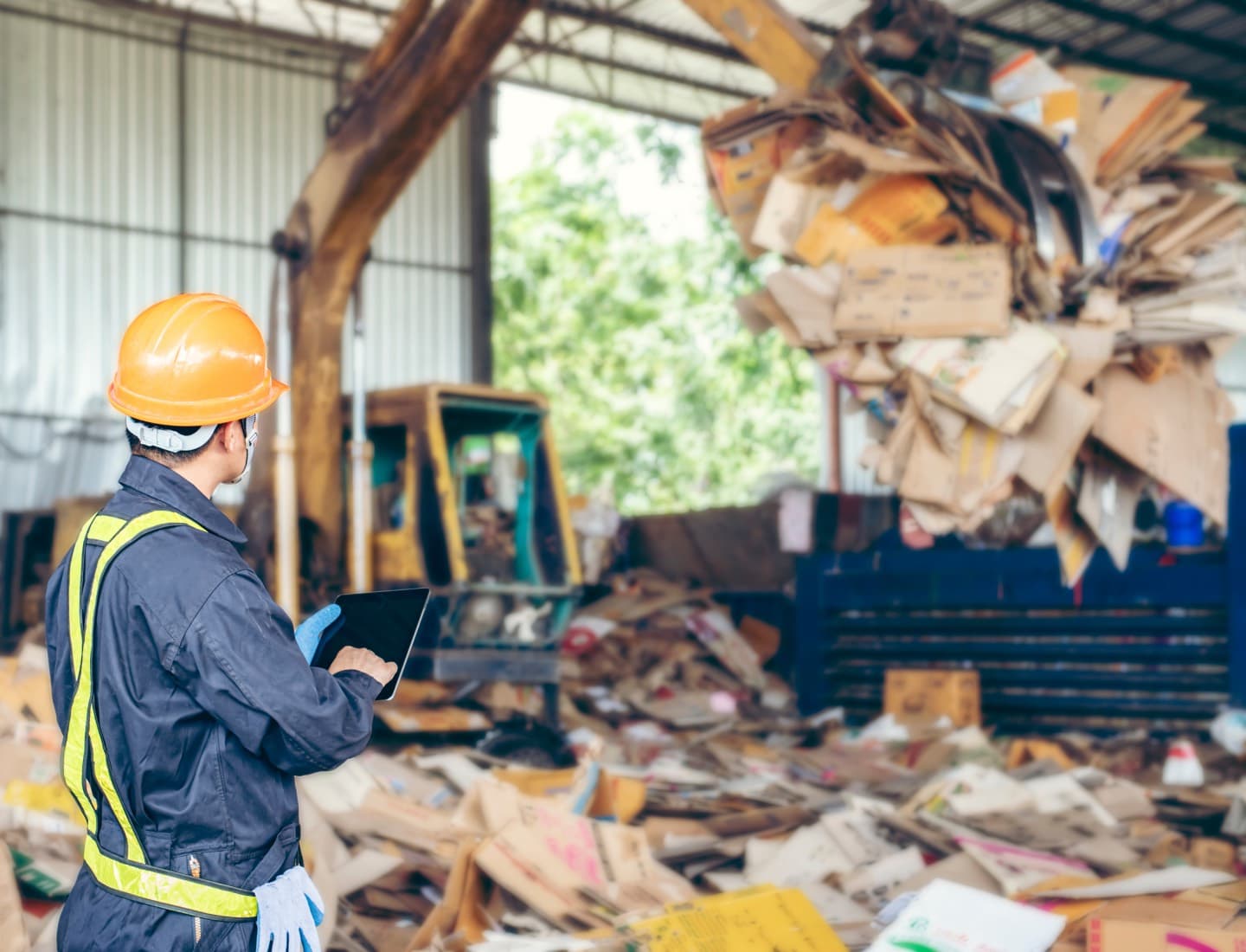
For most plants in Mexico, cardboard recycling for businesses starts informally. Someone stacks boxes in a corner of the warehouse and a local buyer stops by now and then. It works, sort of, but it leaves money on the table, eats up dock space and produces nothing your corporate sustainability team can actually report.
That gap matters more if you are part of a global group. Headquarters will ask for landfill diversion rates, auditors will ask for evidence, and your receiving dock is probably handling a steady flow of export packaging from suppliers in the US and Asia. A formal program turns that flow into a process with an owner, rules and numbers. Here is how to build one in six steps.
Step 1: How much cardboard do you generate, and where?
Without a baseline you cannot negotiate, size containers or prove progress. Spend two to four weeks collecting data:
- Generation points. Receiving (supplier packaging), line-side feeding (component boxes), shipping (damaged or returned cartons), offices and the cafeteria.
- Quantity. If you have a scale, weigh each container before emptying it. If not, count boxes by size and estimate from the average weight of a sample.
- Condition. Note how much arrives clean and dry, how much carries plastic film or foam, and how much gets wet or dirty along the way.
- Peaks. Month-end closes, seasonal ramps and new product launches change volumes and should be planned for.
If you want a broader method that covers every waste stream, not just cardboard, see our guide to running a waste audit.
Step 2: Assign an owner and clear rules
Programs rarely fail for lack of bins. They fail because nobody owns them. Put the roles in writing:
| Role | Main responsibility |
|---|---|
| EHS or facilities | Program owner: rules, targets and monthly reporting |
| Area supervisors | Cardboard from their zone arrives separated and flattened |
| Warehouse or yard | Staging, storage and pickup preparation |
| Purchasing or finance | Verify weights, pricing, invoices and payments |
| Recycling provider | Collection, weighing, documentation and quality feedback |
Write a one-page procedure covering what goes in, what stays out, where it goes and who moves it. Use bilingual signage if your workforce or management team is mixed, and fold the program into existing onboarding and 5S routines so it does not feel like extra work.
Step 3: Separate at the point of generation
Cardboard loses value every time it is mixed with something else. The most effective rule is to separate it where the box is opened, not later in the yard:
- Place a dedicated, clearly labeled cardboard container within a few steps of each unpacking area.
- Require boxes to be broken down and flattened before they go in.
- Remove stretch film, foam, strapping and inserts made of other materials.
- Keep waxed, plastic-coated and food- or grease-stained cardboard out.
Imported components often arrive with heavy plastic wrap and foam, so this step deserves extra attention at receiving. We cover the details in the most common cardboard contamination mistakes, which is worth sharing with supervisors before launch.
Step 4: Choose a storage format and pickup frequency
Once you know your volume, decide how cardboard will be stored and how it will leave the site. The usual options:
- Loose in a roll-off container. Good for medium to high volumes when you have yard space. Your provider swaps a full container for an empty one.
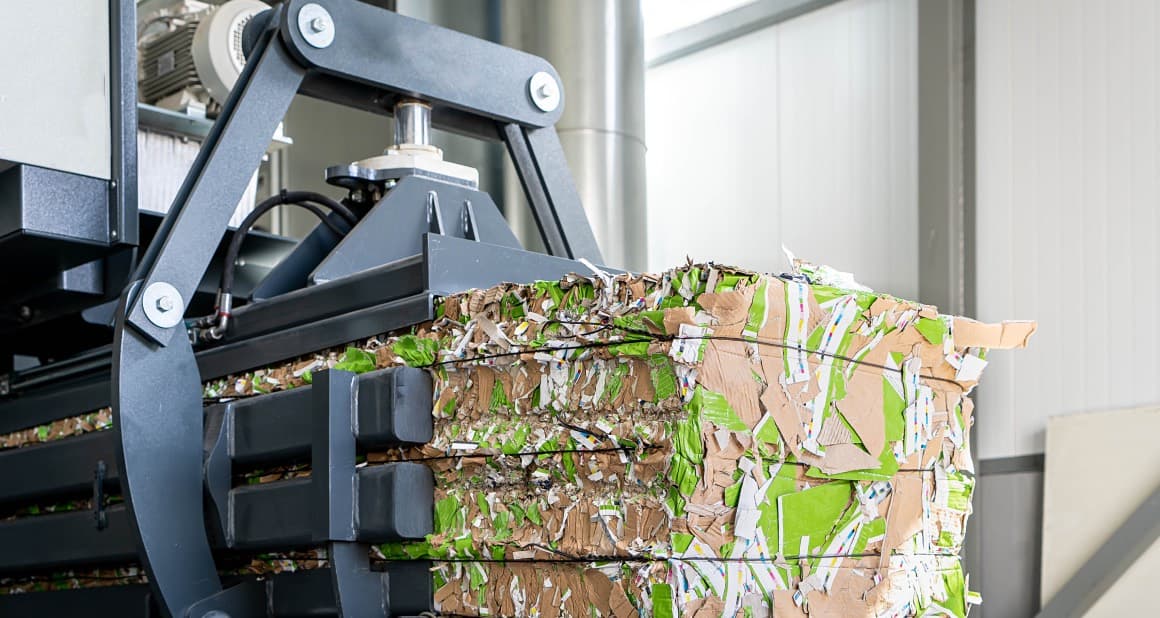
- Baled. Cuts volume dramatically, simplifies storage and usually improves commercial terms. It requires equipment and trained operators; we look at the business case in cardboard balers and compactors.
- Floor cages or carts. Practical for low volumes or as intermediate staging inside the building.
Pickup frequency should balance two goals: never overflowing your space and never hauling half-empty containers. Remember that cardboard is combustible. Store it under a roof, away from ignition sources, and never in aisles or in front of emergency exits.
Step 5: Negotiate transparent commercial terms
Cardboard has market value, but that value moves. Before signing, understand what drives it:
- Recovered fiber market. Mill demand shifts and prices adjust, sometimes month to month.
- Quality. Moisture, contaminants and mixed grades trigger deductions.
- Format. Baled cardboard ships and processes more efficiently than loose material.
- Volume and consistency. A steady flow is more attractive than occasional loads.
- Logistics. Distance, site access and loading equipment affect service cost.
Ask for the pricing formula in writing, how often it is reviewed and what can be deducted. Require every pickup to be weighed on a certified scale and to come with a ticket showing date, weight and material. That ticket supports your accounts payable reconciliation and your environmental reporting: it shows the material went to recycling, not to landfill.
Step 6: Measure, report and improve every month
A profitable program runs on a few well-chosen KPIs:
- Tons of cardboard recycled per month, compared with your baseline.
- Cardboard diversion rate: cardboard sent to recycling divided by total cardboard generated.
- Quality deductions or rejected loads, which show where separation is breaking down.
- Net result: sales revenue plus avoided disposal cost, minus internal handling costs.
- Housekeeping and safety incidents in staging areas.
Review these numbers with supervisors in a short monthly meeting and feed them into your corporate sustainability dashboard. When one area keeps contaminating, the fix is usually a mix of training, better container placement and fast feedback, not more rules. Once cardboard is stable, reuse the same structure for other streams such as stretch film or office paper.
How Zikloa can help
Zikloa buys and collects industrial and commercial cardboard using 15, 20 and 30 m³ roll-off containers and certified scales. We help you choose the storage format and pickup frequency that fit your volume, and integrate cardboard with the rest of your recyclable materials. We have offices in Nuevo León and Mexico City and more than 15 years of experience in industrial waste.
If you are launching a new site or cleaning up an existing program, contact our team for a quote and share your estimated volume and generation points so we can propose a concrete setup.
- #cardboard
- #recycling program
- #occ
- #nearshoring
- #waste diversion
Frequently asked questions
Is cardboard from a manufacturing plant regulated waste in Mexico?
Industrial cardboard is typically managed as special handling waste (residuos de manejo especial), which falls under state jurisdiction. Sending it to recycling with documentation helps you show proper management in inspections and corporate audits; confirm the classification with your environmental advisor.
Can we run the same cardboard program across several sites in Mexico?
Yes, and it makes corporate reporting much easier. Standardize the procedure, signage and KPIs, but size containers and pickup frequency site by site, since volumes and yard space rarely match.
How soon does a cardboard program show results?
Your first monthly report already gives you tonnage and diversion data. The financial picture usually settles after a few cycles, once contamination drops and pickup frequency is tuned to real volumes.