ABS and PC/ABS: recycling engineering plastics
Housings, enclosures and automotive interiors are often ABS or PC/ABS. How to recognize them, keep them apart from look-alike resins and reprocess them without losing properties.
By Zikloa TeamPublished 5 min read
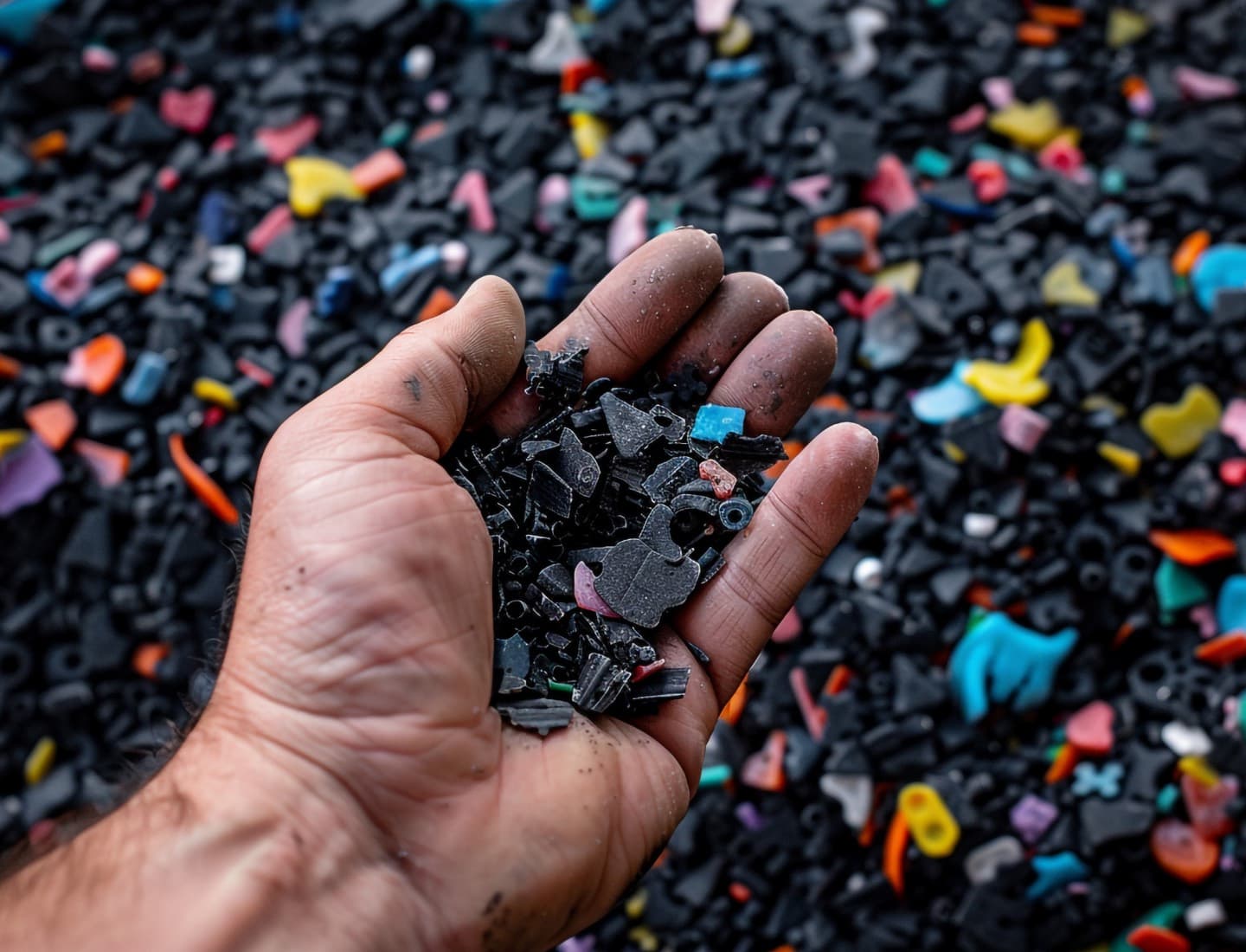
Key takeaway: ABS and PC/ABS are engineering plastics with good recycling value when they arrive identified, kept apart from each other and free of metal, coatings and other resins. The main challenges are look-alike materials such as HIPS, additives such as flame retardants, and proper drying before reprocessing.
ABS recycling is an underused opportunity in many plants. ABS is found in appliance and equipment housings, automotive interiors, toys, luggage and electrical enclosures. Its close relative, PC/ABS, shows up wherever more heat and impact resistance is needed: chargers, electronic enclosures and interior automotive trim.
Mexico's electronics, appliance and automotive clusters, many of them expanded through nearshoring, generate large volumes of both resins as production scrap. Because these are engineering plastics, that scrap is usually worth more than commodity plastic scrap, as long as it is handled with the care its composition requires. This guide covers how, from identification to reprocessing.
ABS and PC/ABS: what they are and how they differ
ABS is an amorphous terpolymer of acrylonitrile, butadiene and styrene. Acrylonitrile adds chemical resistance and stiffness; butadiene, dispersed as rubber particles, provides impact strength; styrene contributes gloss and easy processing.
PC/ABS is a blend of polycarbonate and ABS. PC brings heat resistance and toughness; ABS improves flow, lowers processing temperature and reduces the notch sensitivity that polycarbonate has on its own.
| Feature | ABS | PC/ABS |
|---|---|---|
| Type | Amorphous terpolymer | Amorphous blend |
| Heat resistance | Moderate | Higher |
| Impact resistance | Good | Very good, including at low temperature |
| Processing temperature | Lower | Higher |
| Drying requirements | Moderate | High; PC hydrolyzes |
| Typical uses | Appliance housings, toys, extruded sheet, automotive interiors | Electronic enclosures, chargers, automotive interiors, equipment housings |
| Usual marking | >ABS< | >PC+ABS< |
Where they show up in your operation
- Injection molding scrap: runners, startup shots and rejected parts. The cleanest source, because you know the exact resin and grade.
- Extruded sheet and thermoforming trim: extrusion-grade ABS is used for sheet that becomes large thermoformed parts, and its skeletons and edge trim are recyclable.
- Prototypes, samples and obsolete product written off from inventory.
- End-of-life electrical and electronic equipment: housings are a major source of ABS and PC/ABS, but they carry more contaminants. See our guide to e-waste and circuit board recycling for handling the whole unit.
How to identify them
- Part marking: technical parts usually carry a marking between angle brackets, such as >ABS<, >PC+ABS< or >ABS-FR<, where FR indicates a flame retardant.
- Documentation: for post-industrial scrap, the part drawing or bill of materials gives you the exact grade. It is the most reliable identification and the cheapest. If your material specs are managed by a corporate engineering team abroad, ask them for a resin list by part number.
- Infrared spectroscopy: handheld or lab instruments identify the resin in seconds and distinguish ABS from HIPS or PC/ABS.
- X-ray fluorescence (XRF): detects bromine and other elements associated with flame retardants.
Density does not help much: ABS and HIPS have nearly the same density, so a float test will not separate them.
Contaminants that cut their value the most
- HIPS (high-impact polystyrene): looks and feels just like ABS. Mixed in, it lowers impact and heat resistance.
- Other engineering resins: PC, PMMA or nylon change properties and processing behavior.
- PVC: degrades at ABS processing temperatures, releases hydrochloric acid and corrodes molds and screws.
- Metal: screws, brass threaded inserts, clips and shielding damage granulators.
- Paint, chrome plating and metallizing: these layers do not come off in normal reprocessing and contaminate the material.
- Labels, foams and gaskets stuck to the part.
- Flame retardants: flame-retardant grades must be kept apart from non-FR grades. Some older brominated flame retardants are restricted under international agreements on persistent organic pollutants, and the EU RoHS directive limits PBBs and PBDEs in electrical and electronic equipment. If your products ship to Europe, or your buyer's do, expect this to be checked.
Recommended segregation categories
Based on the above, these are the categories that usually make sense in a plant that generates ABS and PC/ABS:
| Category | Examples | Why it stays separate |
|---|---|---|
| Non-FR ABS, by color | Runners and parts from a single grade | Highest value and easiest to reprocess |
| Flame-retardant ABS | Electrical enclosures marked FR | Additives must be verified |
| PC/ABS | Chargers, enclosures, interior trim | Different drying and processing temperature |
| Extrusion-grade ABS | Sheet trim and skeletons | Flow differs from injection grades |
| Painted or plated parts | Decorative trim and bezels | Coatings contaminate the melt |
| Parts with inserts | Housings with screws or threaded inserts | Metal must be removed |
| Housings from retired equipment | Obsolete office or test equipment | Mixed origin and more contaminants |
You do not need all of them on day one. Start with the categories that carry the most volume and add more once you have generation data. Tagging containers with the part number, not just the resin, makes it far easier to trace a problem lot back to its source.
Reprocessing: drying and heat control
ABS absorbs moisture moderately, and PC/ABS is more sensitive. As a general reference, ABS is usually dried at around 80 °C for 2 to 4 hours in a desiccant dryer, and PC/ABS at higher temperatures, in the range of 90 to 110 °C, with a lower moisture target. Always confirm with the grade's data sheet. Processing wet material causes splay and bubbles in ABS and, in PC/ABS, also molecular weight loss and brittle parts.
The rubber phase in ABS is heat-sensitive: excessive temperatures or long residence times oxidize it, yellow the material and reduce impact strength. Reprocessing should therefore stay within the original grade's temperature window.
A practical point: do not mix extrusion-grade ABS with injection-grade ABS if you need consistent flow. Extrusion grades are more viscous, with a lower melt flow, and change how the whole lot behaves.
Designing for recyclability
If your company designs its own parts, many of these problems can be avoided at the drawing stage: mark the resin on every part, prefer snap fits over overmolded metal inserts, skip paint and plating when they add no function, and use a single resin per assembly where possible. We go deeper into these criteria in our article on ecodesign for recyclable products.
These choices do more than ease end-of-life recycling. They also make it easier to reuse your own production scrap, because each category arrives cleaner and better identified.
How Zikloa can help
Zikloa recycles industrial plastics, including engineering resins, and its raw materials catalog includes extrusion-grade ABS and PC/ABS, as well as circuit boards. If your plant generates scrap from these resins or needs to source them locally, request a scrap assessment or a material quote and we will review volume, grade and terms with you.
- #abs
- #pc/abs
- #engineering plastics
- #e-waste
- #plastic recycling
Frequently asked questions
Can chrome-plated ABS be recycled?
It is difficult. Under the chrome there are usually copper and nickel layers bonded to the plastic, which do not come off in normal reprocessing. These parts need special processes or should be handled as a separate category; never mix them with uncoated ABS.
Can ABS and PC/ABS go in the same lot?
It is not recommended. Although they are partly compatible, the polycarbonate content changes heat resistance, flow and drying requirements. A mixed lot has unpredictable properties and is worth less than either material on its own.
Is recycled ABS suitable for visible parts?
It can be if it comes from clean post-industrial scrap of a single grade and color and is reprocessed with good filtration. For parts with high cosmetic requirements, it is usually blended at a low ratio with virgin resin or reserved for dark colors.