Ecodesign: designing products with recycling in mind
Design decisions determine whether a product gets recycled or landfilled. Practical criteria for materials, joints, labeling and additives, plus a design-review checklist.
By Zikloa TeamPublished 5 min read
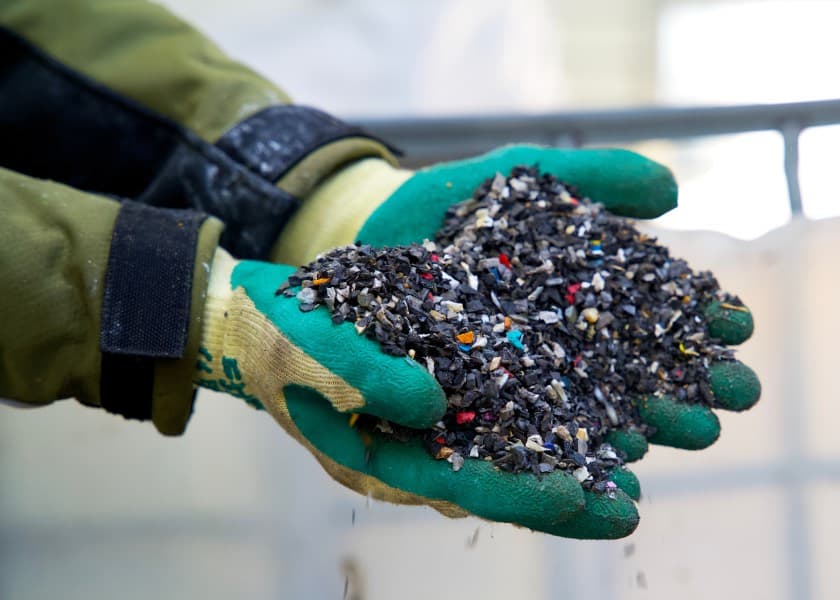
Key takeaway: Ecodesign brings environmental criteria into the engineering phase. For a product to be recyclable, the decisions that matter most are using few, compatible materials, enabling disassembly, marking every plastic part with its composition and avoiding additives, colors and coatings that prevent sorting or reprocessing.
Ecodesign starts from a simple idea: much of what happens to a product at the end of its life is decided while it's still a drawing. If a housing combines three plastics bonded together, if an assembly carries metal inserts that can't be removed or if packaging laminates cardboard to film, the recycler can do little about it later, however good its operation is.
This matters more and more for products manufactured in Mexico. Goods exported to the European Union face growing requirements under the EU's Ecodesign for Sustainable Products Regulation, rolled out product group by product group, and several U.S. states have adopted extended producer responsibility laws for packaging. Meanwhile, design decisions are often made at a design center abroad, while the consequences show up as scrap at the Mexican plant and as waste at end of life. This article focuses on design for recycling, the branch of ecodesign with the biggest impact on waste economics.
What ecodesign is and why it starts in engineering
Ecodesign considers a product's environmental impact across its whole life cycle: material extraction, manufacturing, transport, use and end of life. For a rigorous comparison of alternatives, there's life cycle assessment, described in ISO 14040 and ISO 14044, and for embedding it in an environmental management system, ISO 14006.
You don't need a full assessment to make good decisions. Many improvements come from proven design rules, which often simplify manufacturing as well. What you do need is someone asking the right questions before the design is frozen.
For companies whose products are designed abroad and built in Mexico, that someone may need a feedback loop. Have the plant's EHS or operations team report recurring recyclability problems to the design center: scrap that has no buyer, parts that can't be separated, packaging that arrives in mixed materials. Those observations are cheap to collect and often point to the next design change worth making.
Principle 1: fewer materials, and compatible ones
Every additional material is one more separation someone will have to perform, or a contaminant if they don't.
- Favor single-material designs or a single polymer family: a PP housing with PP clips recycles together; an ABS housing with POM clips doesn't.
- Avoid known incompatible combinations, such as PVC labels or caps on PET containers, or multilayer films made of different polymers.
- For metals, watch alloys and contaminants. Copper trapped in steel scrap, for example from motors or wire harnesses that weren't removed, is hard to eliminate in steelmaking and affects steel quality. Mixing cast and wrought aluminum alloys also lowers the material's value.
To choose the right resin, see our guide to types of recyclable plastic.
Principle 2: design for disassembly
A product that comes apart quickly is a product that gets recycled. Some rules:
- Mechanical joints instead of adhesives where possible: screws, clips, snap fits.
- Few fastener types, preferably made of the same metal as the part they hold or easy to remove.
- Removable metal inserts in plastic parts, or a design that lets a common tool separate them.
- Accessible high-value components, such as circuit boards, motors or copper wiring, so they can be removed without destroying the rest.
A useful test is timing the disassembly of a prototype with basic tools. If it takes too long, in practice nobody will do it and the product will be handled as mixed waste.
Principle 3: identify every material
What isn't identified isn't separated. For technical plastic parts, ISO 11469 defines a generic marking that indicates the polymer and its fillers, for example a polyamide 66 with 30% glass fiber. On packaging, resin identification codes play a similar role.
Marking costs very little when it's built into the mold from the start, and it saves a lot at the sorting stage. It's especially important for engineering plastics, where telling ABS from PC/ABS by eye is nearly impossible. We explain why in ABS and PC/ABS: recycling engineering plastics.
Principle 4: be careful with additives, colors and coatings
| Design decision | Effect on recycling | Alternative to evaluate |
|---|---|---|
| Carbon black pigment | Many near-infrared optical sorters can't detect it | Detectable pigments or lighter colors where function allows |
| Mineral fillers or glass fiber | Limits recycled material to filled applications | Use only where needed and mark it on the part |
| Paint, chrome plating or metallizing on plastic | Contaminates the material during reprocessing | Molded-in color or mold textures |
| Labels with strong adhesives | Leave residue in the regrind | Same-polymer labels or direct marking |
| Cardboard with plastic or wax coatings | Makes fiber recovery harder | Uncoated board or compatible barriers |
| Unspecified flame retardants | Can restrict markets for the material | Document the additive in the product file |
The point isn't to ban these options but to use them where function truly requires it, and to document them so the material can be classified.
Designing to use recycled content, too
Ecodesign works in both directions of the loop: making the product recyclable and using recycled material to make it. Some practices:
- Specify by performance, not by origin: melt flow index, impact strength, color, tolerated contaminants.
- Set realistic tolerances for color or property variation on non-visible parts.
- Validate with trial runs before changing the production specification.
If your plant is already at that stage, see how to add recycled content without losing quality.
Checklist for your next design review
- How many different materials does the product contain, and which could be consolidated?
- Are materials in permanent contact compatible enough to be recycled together?
- Can it be disassembled with common tools in a reasonable time?
- Are plastic parts marked with polymer and filler?
- Are there pigments, paints, coatings or adhesives that could be eliminated?
- Is the packaging single-material or made of easily separated materials?
- Does the specification accept recycled content where function allows?
- Has anyone asked a recycler about the material's end-of-life value?
How Zikloa can help
Recyclers see every day which designs work and which don't. Zikloa recycles plastics such as PET, HDPE, LDPE, PP and PS, among others, along with metals, cardboard and paper, and supplies raw materials such as ABS and PC/ABS. From that position, we can share which material combinations have a market in Mexico and which make separation harder. See the materials we handle on our plastics recycling page.
If you're redesigning a product or package and want a recycling perspective before releasing the design, share your project with our team.
- #ecodesign
- #design for recycling
- #product engineering
- #plastics
- #packaging
Frequently asked questions
Does ecodesign make products more expensive?
Not necessarily. Using fewer materials, simplifying joints or dropping unnecessary coatings often lowers manufacturing cost. Where there is an added cost, weigh it against end-of-life material value and your customers' requirements.
Which standards guide ecodesign within a management system?
ISO 14006 provides guidelines for incorporating ecodesign into an environmental management system, and ISO 14040 and ISO 14044 describe how to run a life cycle assessment to compare design alternatives.
Can glass-filled plastic be recycled?
Yes, but usually only into applications that accept filled material. That's why marking the part with the polymer type and filler content is essential, so it gets sorted correctly.