Types of recyclable plastic: a guide to PET, HDPE, LDPE, PP and PS
How to recognize the five plastics most plants generate, what resin codes really tell you, and how to sort them so they find a buyer in Mexico.
By Zikloa TeamPublished 5 min read
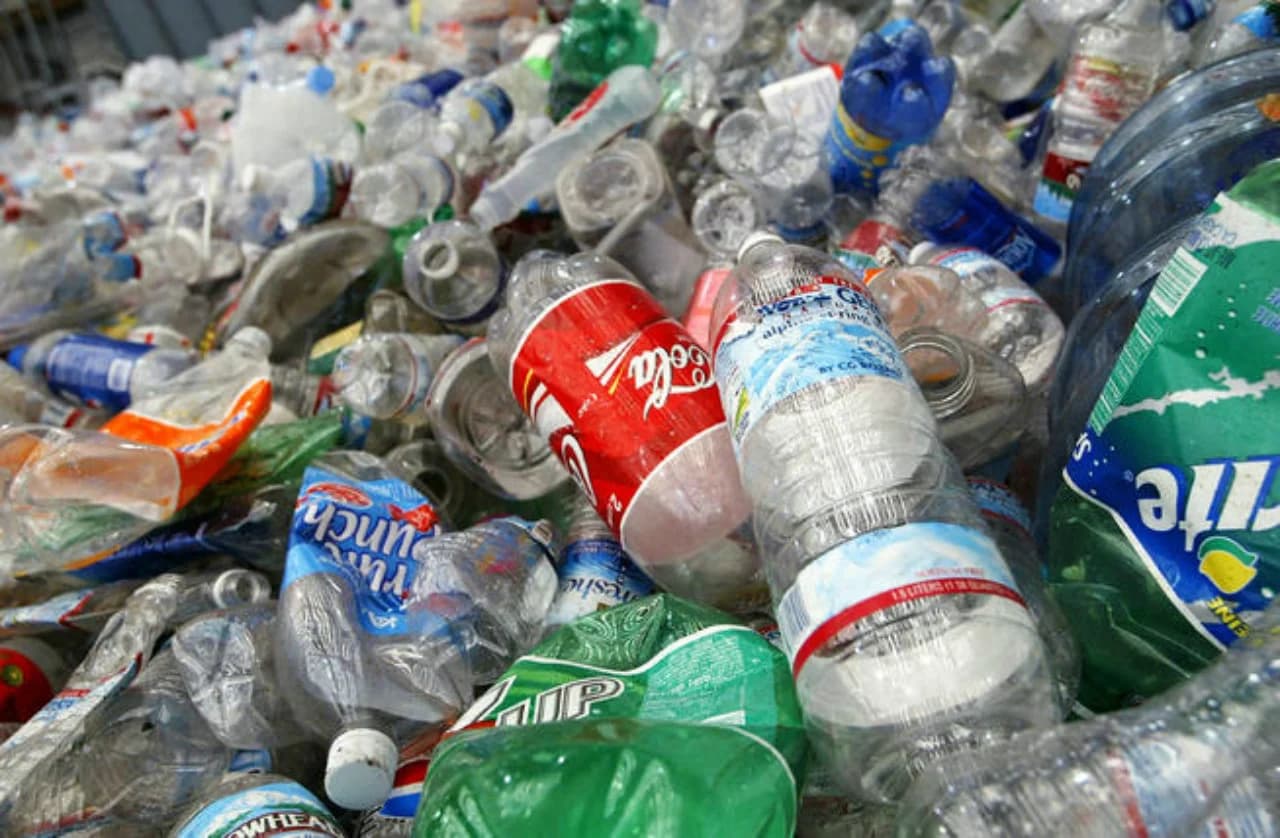
Key takeaway: The plastics most commonly recycled in industry are PET (1), HDPE (2), LDPE (4), PP (5) and PS (6). The resin code tells you what you are holding, but the material's value depends on sorting it by resin, color and cleanliness right where it is generated.
If your plant receives palletized inputs, ships finished goods or runs molding lines, you are already handling several types of recyclable plastic, even if they all end up in the same bin. That is the most expensive mistake: two resins mixed together are worth less than each one on its own, and some combinations have no buyer at all.
For companies that have recently set up operations in Mexico, there is an extra layer. Corporate sustainability targets are often written with US or European recycling systems in mind, while the local market has its own terminology, buyers and logistics. This guide covers how to identify the five most common plastics, where they show up in a typical operation and what it takes to get them recycled instead of landfilled.
What the numbers in the recycling triangle mean
The triangle with a number from 1 to 7 is the resin identification code. It helps sorters and recyclers recognize the material; it does not mean the item is recyclable everywhere.
- 1 – PET: polyethylene terephthalate.
- 2 – HDPE (PEAD on Spanish labels): high-density polyethylene.
- 3 – PVC: polyvinyl chloride.
- 4 – LDPE (PEBD): low-density polyethylene, including linear low-density (LLDPE).
- 5 – PP: polypropylene.
- 6 – PS: polystyrene, solid or expanded.
- 7 – Other: polycarbonate, ABS, nylon, acrylic, blends and multilayers.
Technical parts, such as housings and automotive components, more often carry a marking between angle brackets: >PP<, >PA66-GF30< or >PC+ABS<. That marking is more precise than the triangle because it identifies the resin, whether it is a blend, and even the type and percentage of filler.
The five plastics you will find in most plants
PET (1)
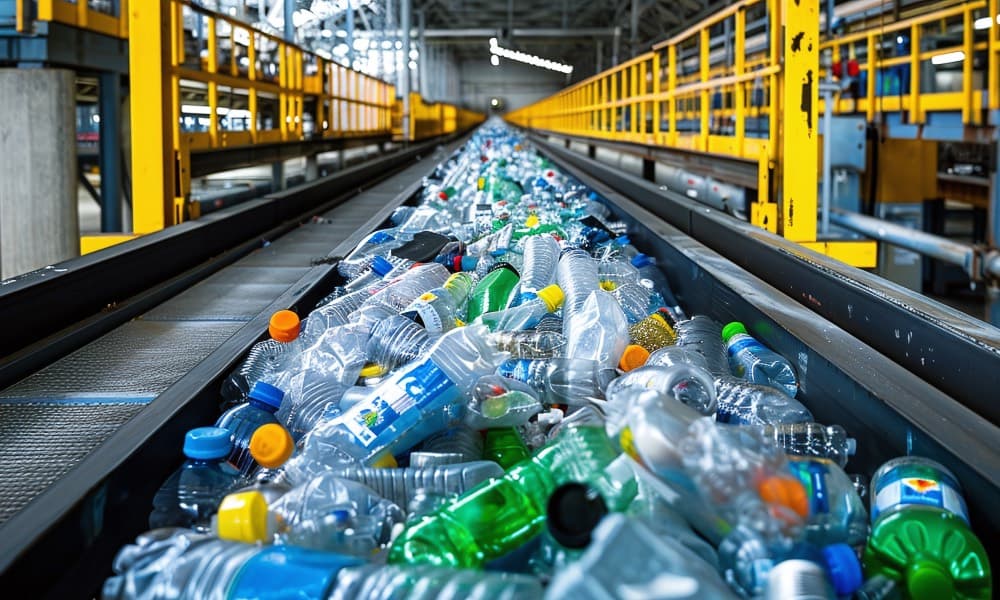
Rigid, clear and light. Think water and soda bottles from the cafeteria, thermoformed trays that protect inbound components, and PET strapping. PET has one of the most developed recycling markets in Mexico; we cover the full process in our guide to PET recycling in Mexico.
HDPE (2)
Opaque, stiff and slightly waxy to the touch. It shows up in jugs and carboys, buckets, drums, caps and some pallets. One caveat: a container that held a hazardous substance must be managed under that classification before anyone considers recycling it.
LDPE (4)
Soft and flexible. This is the stretch wrap around pallets, bags, bubble wrap and shrink film. Because of its volume it is one of the most visible waste streams in any warehouse, which is why we wrote a separate guide on stretch film and polyethylene bag recycling.
PP (5)
Light and fatigue-resistant: the living hinge on a flip-top cap is PP. You will see it in woven raffia sacks and bulk bags, plastic crates, pallets, caps, injection-molded parts and packaging strap.
PS (6)
Either rigid and brittle (trays, dividers, cups, housings) or expanded, the foam that cushions equipment and appliances. Expanded PS is mostly air, so recycling it depends on compacting or densifying it before it is shipped.
Comparison table: telling them apart on the floor
| Resin | Approx. density (g/cm³) | Floats in water? | Hands-on clue | Typical industrial sources |
|---|---|---|---|---|
| PET | 1.33–1.40 | No | Rigid, clear, crinkles | Bottles, trays, strapping |
| HDPE | 0.94–0.97 | Yes | Waxy, opaque | Jugs, buckets, drums |
| LDPE | 0.91–0.93 | Yes | Flexible, stretches | Stretch film, bags |
| PP | 0.90–0.91 | Yes | Light, bends without breaking | Raffia, crates, caps, strap |
| PS | 1.04–1.05 | No (solid PS) | Stiff, brittle | Trays, dividers, foam |
A water float test helps separate families: polyolefins (PE and PP) float, while PET, PS and PVC sink. It has clear limits: talc-filled PP may sink, and foam always floats. Treat it as a quick check, not as proof; for large or doubtful lots, ask for a lab analysis.
PVC and the number 7 problem
PVC (3) deserves special attention. It appears in pipe, profiles, cable jacketing and some blister packs. It can be recycled when kept separate, but it is a serious contaminant for other resins: at PET processing temperatures it degrades, releases hydrochloric acid and causes specks and yellowing across the whole batch. A handful of PVC blisters in a PET bale can lower its price or get it rejected.
Number 7 is not a material; it is a category. It includes engineering resins like PC, ABS, PC/ABS and nylon, which have good markets when clean and sorted by type, but also multilayers and blends that are hard to recycle today. If your plant generates technical parts, confirm the exact marking before they go into a shared bin.
What actually makes a plastic recyclable
A plastic gets recycled when three conditions are met: there is a buyer who processes it, it arrives at the quality that process needs, and the volume justifies the freight. On the plant floor, that becomes five rules:
- Sort by resin. Never mix PE with PP or PET with PS in the same bale or container.
- Sort by color. Natural or clear material is usually worth more than colored, and black has the fewest end uses.
- Keep it clean. Remove paper labels, tape, staples, product residue and dirt. Moisture and dirt are typically deducted from the weight.
- Mind the format. Tight bales or ground material ship and sell better than loose parts.
- Aim for consistency. Steady generation makes it easier to schedule pickups and negotiate better terms.
Setting up sorting in your plant
Start where each plastic is generated, not at the waste storage area. Place labeled containers at unpacking areas (film and strapping), on the production floor (scrap and rejected parts) and in cafeterias (PET bottles). Use signs with photos of accepted materials, and bilingual labels where your workforce or visiting auditors need them; people recognize a picture faster than a resin code.
Station design, signage and training are covered step by step in our guide to source separation and in-plant recycling stations. Before deciding how many categories to separate, measure what each area generates for a few weeks. Separating a plastic you only produce a few kilograms of per month rarely pays off.
Keep the regulatory side in mind, too. Under Mexico's General Law for the Prevention and Integral Management of Waste (LGPGIR), plastics generated by a plant are usually classified as special handling waste (residuos de manejo especial), unless they are contaminated with hazardous substances. That classification determines who may receive them and which records you need to keep.
How Zikloa can help
Zikloa recycles PET, HDPE, LDPE, PP, PS and other industrial plastics. We help you identify which resins your operation generates, define how to sort them for better value and schedule pickups with roll-off containers or a grapple crane, depending on volume and format. See the plastics we recycle or request an assessment of your plastic waste streams.
- #plastics
- #pet
- #polyethylene
- #polypropylene
- #waste sorting
Frequently asked questions
Does the recycling symbol on a part mean it will be recycled?
No. The numbered triangle only identifies the resin. Whether the material actually gets recycled depends on having a buyer for it, on how clean it is and on keeping it separate from other plastics.
What should we do with plastics marked number 7?
Number 7 is a catch-all for very different resins, such as polycarbonate, ABS, nylon, acrylic and multilayer materials. Look for the specific marking on the part, like >PC< or >ABS<, and sort by resin; several engineering plastics have solid markets when they arrive clean.
Are the abbreviations on Mexican packaging different from those in the US?
The code numbers are the same, but Spanish labels often use PEAD for HDPE and PEBD for LDPE. Polystyrene foam is commonly called unicel in Mexico, which is worth knowing when you write work instructions or train floor staff.