Industrial symbiosis: when one plant's waste is another's raw material
Your plastic scrap, cardboard or metal chips can be another plant's input. Here is how industrial symbiosis works and what it takes to make an exchange viable in Mexico.
By Zikloa TeamPublished 5 min read
Key takeaway: Industrial symbiosis is the exchange of waste, by-products, energy or water between companies, so that what one discards becomes another's input. It works when there are clear specifications, steady volumes, viable logistics and someone guaranteeing quality and traceability, whether through a direct agreement or an intermediary.
Industrial symbiosis applies to factories an idea nature solved long ago: in an ecosystem, one organism's waste feeds another. In industry, it means the plastic scrap from an injection molding plant, the chips from a machine shop or the cardboard from a distribution center can become raw material for another company instead of a disposal cost.
For companies that have recently set up in Mexico, this is often an untapped opportunity. Manufacturing clusters in Nuevo León, the Bajío and central Mexico generate large, compatible material streams, and there is an established local market for many of them. The challenge is knowing who needs what and under which conditions. This article covers the types of exchange, realistic examples, the conditions for success and how to spot opportunities in your own plant.
What industrial symbiosis is and where it comes from
The most frequently cited case is Kalundborg, Denmark, where for decades a power plant, a refinery and other local companies have exchanged steam, water and by-products. It grew organically, from bilateral deals between neighbors who found economic benefits in cooperating.
The lesson for any plant is that symbiosis doesn't need a large government program to get started. It only takes one company's output stream matching another's input stream in quality and quantity, and someone to connect them.
Types of exchange between companies
- Materials and by-products: scrap, trimmings, rejects, packaging and process residues another company uses as an input. This is the most common and accessible type.
- Energy: waste heat or steam released by one plant and used by another.
- Water: treated process water reused at a facility with lower quality requirements.
- Shared services: joint collection, storage or consolidated transport among neighboring companies.
Energy and water exchanges usually require physical infrastructure and proximity. Material exchanges can work between plants hundreds of kilometers apart if logistics and material value justify it.
Examples of material exchanges
| One plant's waste | Possible use at another | Key condition |
|---|---|---|
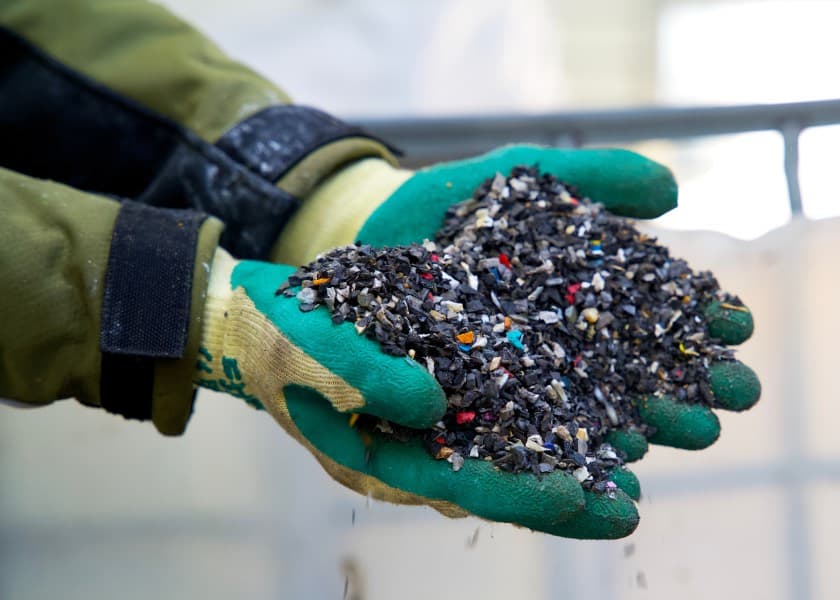
| PP or ABS injection scrap | Reprocessors that grind or pelletize it for new parts | Sorted by resin and free of contaminants |
| Filled nylon purgings and rejected parts | Reprocessing into filled compounds | Identify nylon type and filler |
| Corrugated cardboard | Paper mills using it as fiber | Dry and free of plastics and food waste |
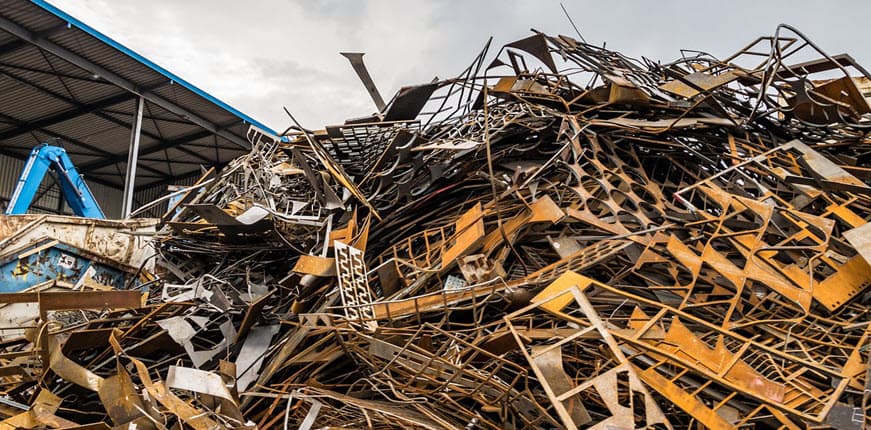
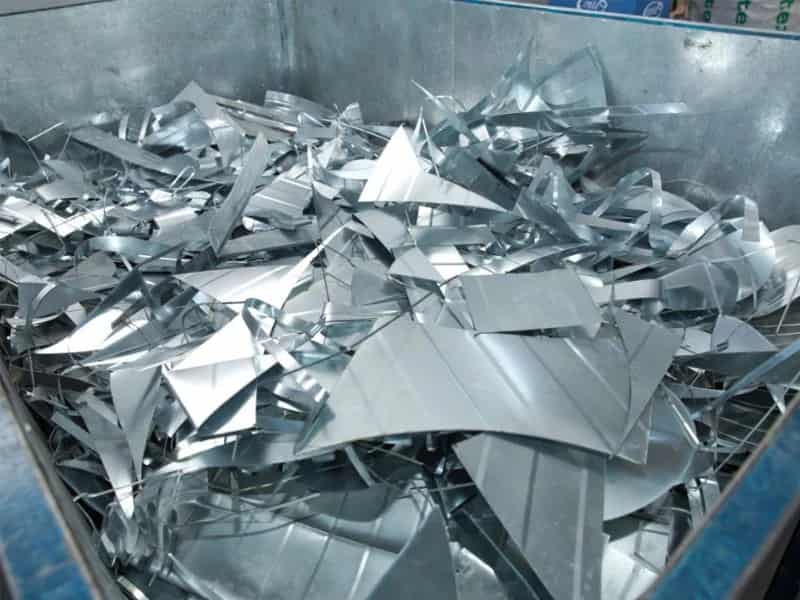
| Aluminum or steel machining chips | Foundries and steel mills | Dry, low oil content, sorted by alloy |
| Polyethylene bags and film | Film recyclers and bag manufacturers | Clean, without excessive labels or tape |
| Damaged wood pallets | Repair and reuse shops | Sorted by size and condition |
Many of these materials return to the market as inputs with technical data sheets. To understand when they make sense compared with virgin materials, see recycled vs. virgin raw materials. If your plant generates plastic scrap, our guide on turning injection and extrusion scrap into revenue goes into detail.
What makes an exchange work
- Clear specifications. The buyer needs to know exactly what it's receiving: type, purity, moisture, form (bales, regrind, bulk) and tolerated contaminants.
- Consistency. An irregular stream is hard to integrate into another company's production. Volume and quality must be predictable.
- Viable logistics. Moving the material can't cost more than it's worth. Compacting, baling or processing before shipping changes the math.
- Documentation. Every delivery needs a weight, a description and, depending on the waste type, the documents Mexican regulations require.
- Pricing mechanism. A fixed price can break when markets move; linking it to a reference or reviewing it periodically adds stability.
- Agreed rejection criteria. What happens if a lot doesn't meet spec. Defining it upfront prevents most disputes.
How to measure the benefit
An exchange that isn't measured ends up depending on the goodwill of whoever championed it. Track three figures every month: tons delivered into the exchange, disposal cost avoided plus revenue earned, and the input the receiving party no longer buys as virgin material. That's enough to justify the effort to plant leadership, and it feeds straight into the diversion metrics your headquarters already asks for, with no extra data collection.
For subsidiaries of global groups, it also creates a story worth telling internally: a local, verifiable example of the circular commitments in the group's sustainability report, backed by weight tickets rather than estimates.
Common barriers and how to overcome them
- Insufficient volume: few plants generate on their own what a buyer needs. The fix is consolidating with other generators through an aggregator.
- Variable quality: solved with source separation, training and, when needed, intermediate processing such as grinding, drying or compacting.
- Confidentiality: some residues reveal information about your process or product. An intermediary means neither company has to expose itself to the other.
- Regulatory uncertainty: depending on its classification, material leaving your plant may be considered waste under Mexican law and carry handling obligations. Make sure the receiver can legally handle it, and confirm the classification with a local environmental consultant.
- Lack of trust: initial trial lots with joint inspection build the relationship.
The intermediary's role
In practice, many material exchanges don't happen directly between two factories but through a recycler that buys from many generators and sells to many users. That intermediary aggregates small volumes, sorts and processes material to a commercial spec, handles logistics and documents every movement.
Symbiosis then stops depending on your neighbor needing exactly what you discard and becomes a network. It's the foundation of a circular supply chain that works at scale.
How to spot opportunities in your plant
- List your waste streams with composition, monthly volume, physical form and frequency.
- List your inputs that could be partly or fully replaced with recycled material.
- Prioritize clean, steady, high-volume streams.
- Ask a recycler about the market for each stream and what would improve its value.
- Run a trial with a single stream for one or two months.
- Formalize the specification, frequency, price and rejection criteria in writing.
How Zikloa can help
Zikloa works on both sides of the exchange. We buy and collect plastics, cardboard, paper and metals from industrial plants, process them and, through our raw material supply service, provide inputs such as ABS, PC/ABS, nylon for reprocessing, polyethylene, polystyrene, cardboard and pallets. With more than 10,000 tons recycled every month, we can consolidate streams that would have no outlet on their own.
If you think your waste could be someone else's raw material, tell us what your plant generates.
- #industrial symbiosis
- #by-products
- #recycled raw materials
- #circular economy
Frequently asked questions
Does industrial symbiosis only work inside industrial parks?
No. Proximity lowers transport costs, but many material exchanges work between plants in different regions through an intermediary that collects, processes and redistributes the material.
What if our waste volume is too small to interest another company?
That's the most common case. A recycler receiving the same material from several generators can consolidate small volumes and process them up to the specification and quantity a buyer needs.
Do we need a contract for a by-product exchange?
It's strongly advisable. A written agreement sets the specification, frequency, pricing mechanism, transport responsibilities and rejection criteria, and prevents disputes when something changes at either plant.